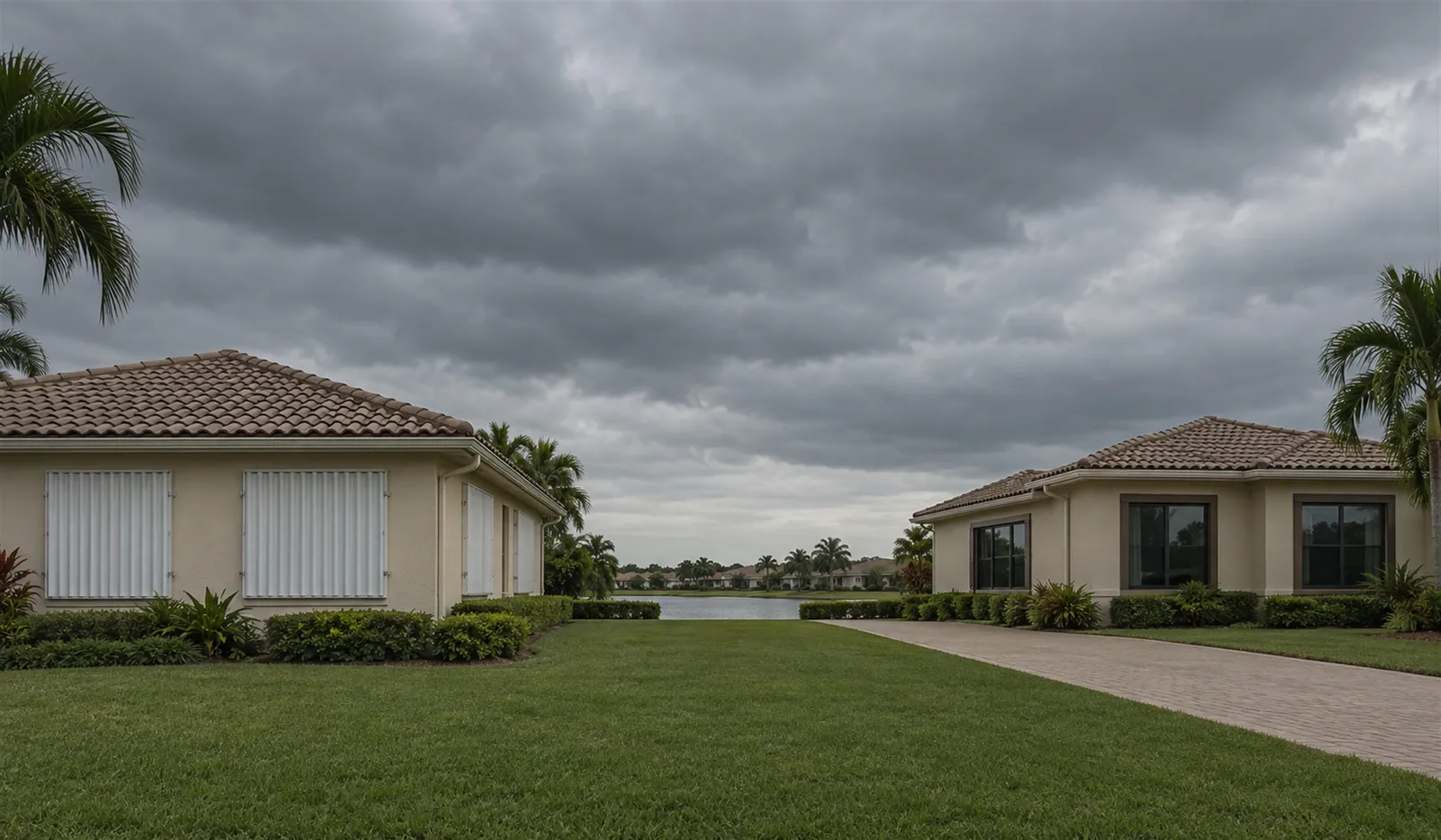
Impact windows versus hurricane shutters
A comparison written by a company that sells one of them, and admits the other one protects your house just as well.
The honest part first
Shutters protect the house as well as impact glass does
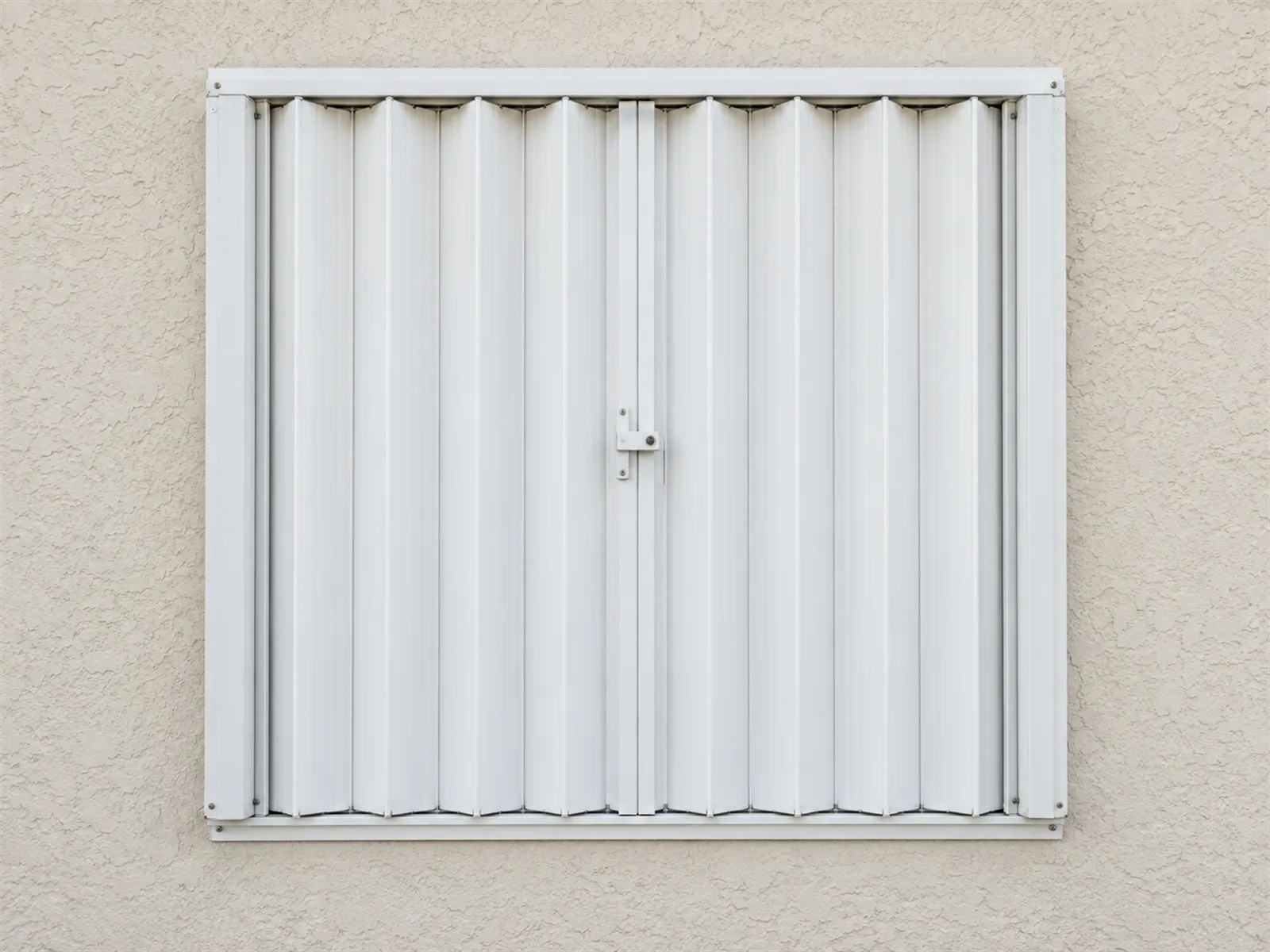
A properly certified accordion shutter passes the same debris impact test as an impact window. With the shutter closed, during the storm, the structural protection is equivalent. Any company telling you that impact glass protects more is either misinformed or hoping you are.
So the honest question is not which one protects better. It is what each one costs you across the years when there is no storm, and what happens on the day there is one and nobody is home.
Side by side
The comparison, without the parts that flatter us
Cost is relative, not a price. Real numbers come from measuring your openings, and the ranges that circulate online for "a 2,500 square foot home" tell you nothing about yours.
| Impact windowsWhat we sell | Accordion shuttersThe main alternative | Roll-downsMotorised | Storm panelsThe cheapest compliant option | PlywoodEmergency only | |
|---|---|---|---|---|---|
| Meets the Florida Building Code in the HVHZ | Yes | Yes, when certified | Yes | Yes | Emergency use only |
| Qualifies for the wind mitigation insurance credit | Yes | Yes | Yes | Yes, permanently anchored | Never |
| What you have to do when a storm is coming | Nothing | Close them, around 15 to 30 minutes | Press a button | Fit every panel, hours of work | Cut, fit and screw, most of a day |
| Protects when nobody is home | Yes | Only if closed first | Only if closed first | Only if fitted first | No |
| Daylight during the storm | Yes | No | No | No | No |
| Does anything for you the other 364 days | Noise, UV, heat and security | No | Some shade | No | No |
| Needs storing somewhere | No | No | No | Yes, a lot of space | Yes |
| Relative cost | Highest | Moderate | High | Lowest compliant | Lowest |
| Service life | Decades | 20 to 30 years | 20 to 30 years | 20 to 30 years | 4 to 6 years |
If your budget only reaches storm panels, buy storm panels and fit them properly. A code-compliant cheap option that you actually deploy beats an expensive one you could not afford. What does not work is plywood as a plan, or window film as protection.
So why pay more for impact windows?
They do not depend on you being home. A roll-down nobody closed protects exactly as much as bare glass
They work every day: traffic and aircraft noise, UV, heat through the glass, and security against break-ins
You keep your daylight. With shutters closed you live in the dark for two or three days
Nothing to store, nothing to deploy, nothing ageing in the garage
One decision, once, instead of a decision before every named storm
They help when you sell, in a market where buyers ask
The hybrid nobody advertises
There is a sensible middle that most companies will not propose because it sells less: impact windows in the living room, the kitchen and the main bedroom, where noise, light and UV actually matter to you, accordion shutters on the guest rooms, bathrooms and utility areas, and impact doors on the patio so the largest and heaviest opening never has to be deployed. It gets you most of the daily benefit for roughly half the money.
One warning, and it is not a small one. The wind mitigation insurance credit is all or nothing. Every glazed opening, including the garage door, has to be protected by something approved. A hybrid works only if the shutters are certified and every single opening is covered. A partial job — the front of the house done, the back left bare — can earn you no insurance credit at all, no matter how much you spent.
Two things that are not hurricane protection
Window film does not meet the Florida Building Code for opening protection, does not pass inspection in the HVHZ, and never qualifies for the insurance credit. It holds broken glass together, which reduces flying shards, and it does not stop the glass breaking or keep the building envelope closed. It is a legitimate safety and UV upgrade sold, too often, as something it is not.
Plywood never qualifies for a wind mitigation credit either. It needs replacing every few years, the repeated anchor holes enlarge and compromise the stucco and the water barrier behind it, and fitting a whole house takes most of a day at exactly the moment you have other things to do. It still makes sense for a cabin visited twice a year, or as a last resort when there is nothing else. It is not a plan for a home you live in.
Questions people ask when comparing
If shutters protect the same, are impact windows a waste of money?
Not a waste, but the reason has to be honest. You are paying for the days there is no storm, for the fact that protection does not depend on somebody closing something, and for keeping your windows in a market where buyers ask about them. If none of that is worth the difference to you, certified shutters are a perfectly respectable answer and we will say so.
Can I do half the house now and half later?
For safety, yes: every protected opening is one less way in. For the insurance credit, no. It is all or nothing, and a half-protected house typically earns nothing. If the credit is part of your maths, plan the whole envelope even if you phase the payments.
What about the garage door?
It is usually the largest opening in the house and it counts. Leaving it unrated can cancel the credit for everything else you bought, so a wind-rated door belongs on the same quote as the windows.
Are non-impact replacement windows an option here?
Not on their own. In the HVHZ a non-impact window is not legal without approved opening protection over it, so a cheap quote for "new efficient windows" quietly commits you to buying certified shutters for every opening as well. That comparison is worth making before you sign anything.
Want the version for your actual house?
We will quote impact, and tell you where shutters would do the job for less. It is your money.
Get a free estimate