
Neolux Napa
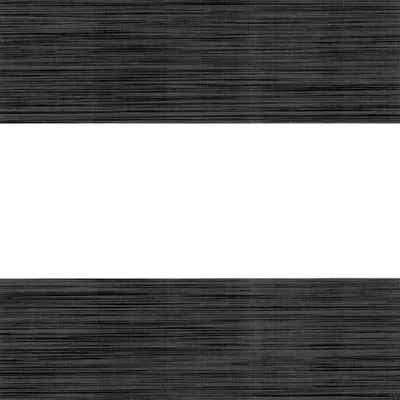
100% PES · 120 g/m²
The lightest cloth in the range. It stacks to almost nothing at the head, which is what a small or shallow opening needs.
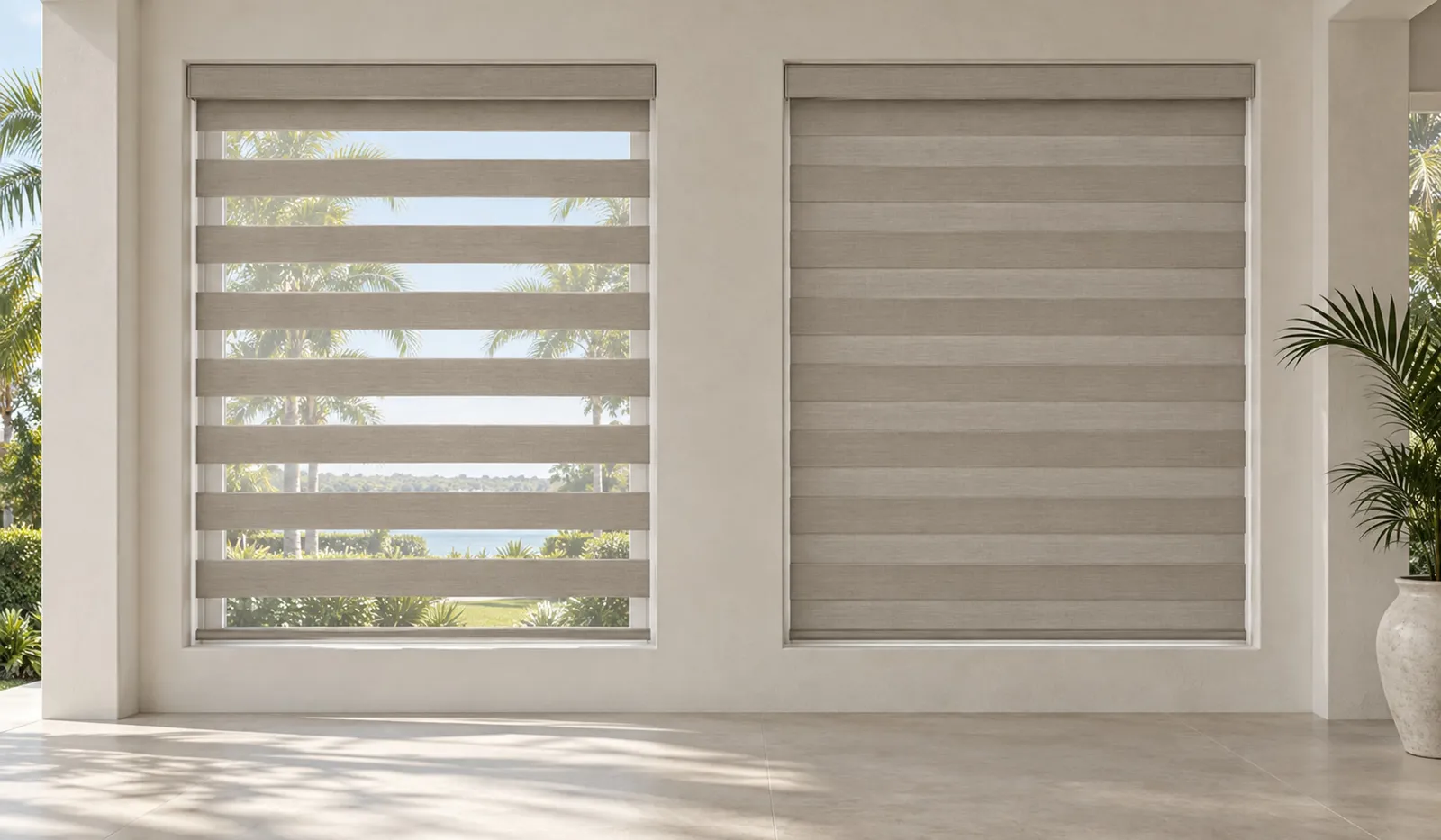
Two bands of cloth on one roll. Line them up and the window is sheer; offset them and it closes.
How a dual shade works
A dual shade — the zebra, in most showrooms — is a single cloth woven as alternating stripes: a sheer band, then a solid one, repeating. It runs on one roller and one chain, and moving it a few centimetres slides the solid bands over the sheer ones. Lined up, you are looking through a sheer. Offset, the window is closed. It is the only shade on this site that gives a room two settings without two shades on the header.
What the solid band is decides the second setting. A plain band gives you a light filter closed and a sheer open; a dim-out band gives you a genuinely dark room closed, at a heavier weight and a fatter roll. Neither is a blackout — even a dim-out passes some light through the cloth, and the stripes never seal perfectly against each other. A room that has to be black is a blackout fabric on its own roller.
Twelve cloths in two groups, and the group is the decision: how dark the window goes when the bands are offset. Weight runs with it — the darker the closed setting, the heavier the roll.
100% PES · 120 g/m²
The lightest cloth in the range. It stacks to almost nothing at the head, which is what a small or shallow opening needs.
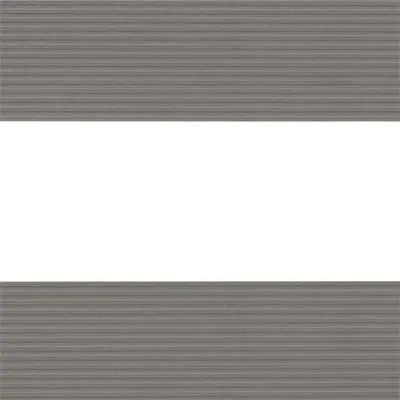
100% PES · 140 g/m²
A light, even weave. Closed it is a soft filter rather than a dim room, which suits a living space used in daylight.

100% PES · 150 g/m²
A slightly firmer hand than the Arcadia at nearly the same weight, so the bands hold their line better on a wide opening.

100% PES · 154 g/m²
The middle of the filtering group and the one most often specified in it, for no reason more complicated than that it suits most rooms.

100% PES · 157 g/m²
The heaviest of the plain filtering cloths. It closes to a noticeably dimmer window than the Napa without becoming a dim-out.
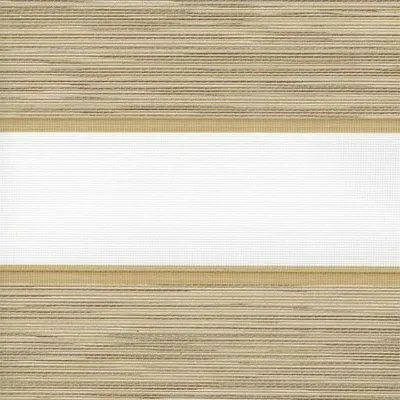
77% PES + 23% cotton · 160 g/m²
The only cloth here with a natural fibre in it. The cotton gives the solid band a matte, slightly irregular face that a pure polyester does not have.

30% PES + 70% PVC · 270 g/m² · fire retardant
A screen-type yarn rather than a fabric one, and the only fire-retardant cloth in the range — which is what puts it on a commercial specification.
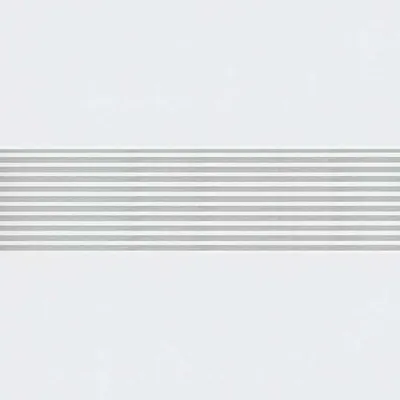
100% PES · 180 g/m²
The lightest way into a dark closed setting. It rolls small for a dim-out, which matters where the recess is shallow.

100% PES · 203 g/m²
A step up in weight and in how much the closed setting actually darkens. A common bedroom answer where a full blackout is more than the room needs.

100% PES · 220 g/m²
Mid-weight, and it hangs flat enough that the bands stay square across a wide opening.
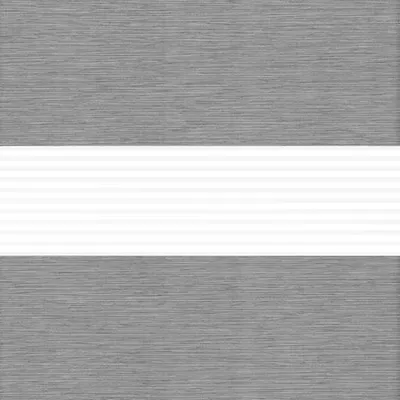
100% PES · 242 g/m²
Heavy, with a dense solid band. Closed it is close to the darkest a dual shade gets while still being a dual shade.

100% PES · 282 g/m²
The heaviest cloth in the range. It gives the darkest closed setting here and the largest roll, so the header has to be sized for it.
Weights and compositions are the mill’s published figures. A dim-out is not a blackout: it passes some light through the cloth and the bands do not seal against each other, so a room that has to be black takes a blackout fabric on its own roller.
Two settings on one roller, one chain and one header
The alternative is a screen and a blackout on a double bracket, which is two cloths, twice the hardware and a deeper recess to put them in.
A sheer view by day and a closed window at night, without changing anything out
A shallow header, because there is only ever one roll in it
A dim-out band where a bedroom wants dark but not black
A fire-retardant option, for a commercial or multifamily specification
Manual or motorised, and on a run of tall openings motorised earns its price
Yes. Dual, zebra, banded and day-night are the same product under different showroom names: alternating sheer and solid bands on one roller.
A dim-out band gets a bedroom genuinely dark; a filtering band does not, and neither is a blackout. Light passes through the cloth and the bands do not seal edge to edge. If black is the requirement, put a blackout fabric on the opening instead.
By day, no more than through any sheer — the bright side is the one you cannot see into. After dark, with the lights on, an aligned dual shade is close to transparent. Offset it and the window closes, which is the point of the product.
Usually, and it is replacing two shades rather than one. Where it is worth it is an opening that needs both settings; where it is not is a window that only ever needed the glare knocked off, which is a screen.
The rest of the catalog
One set of measurements and one quote whichever of these you land on. What changes is what the cloth does to the light — and, on the last of them, what raises it.
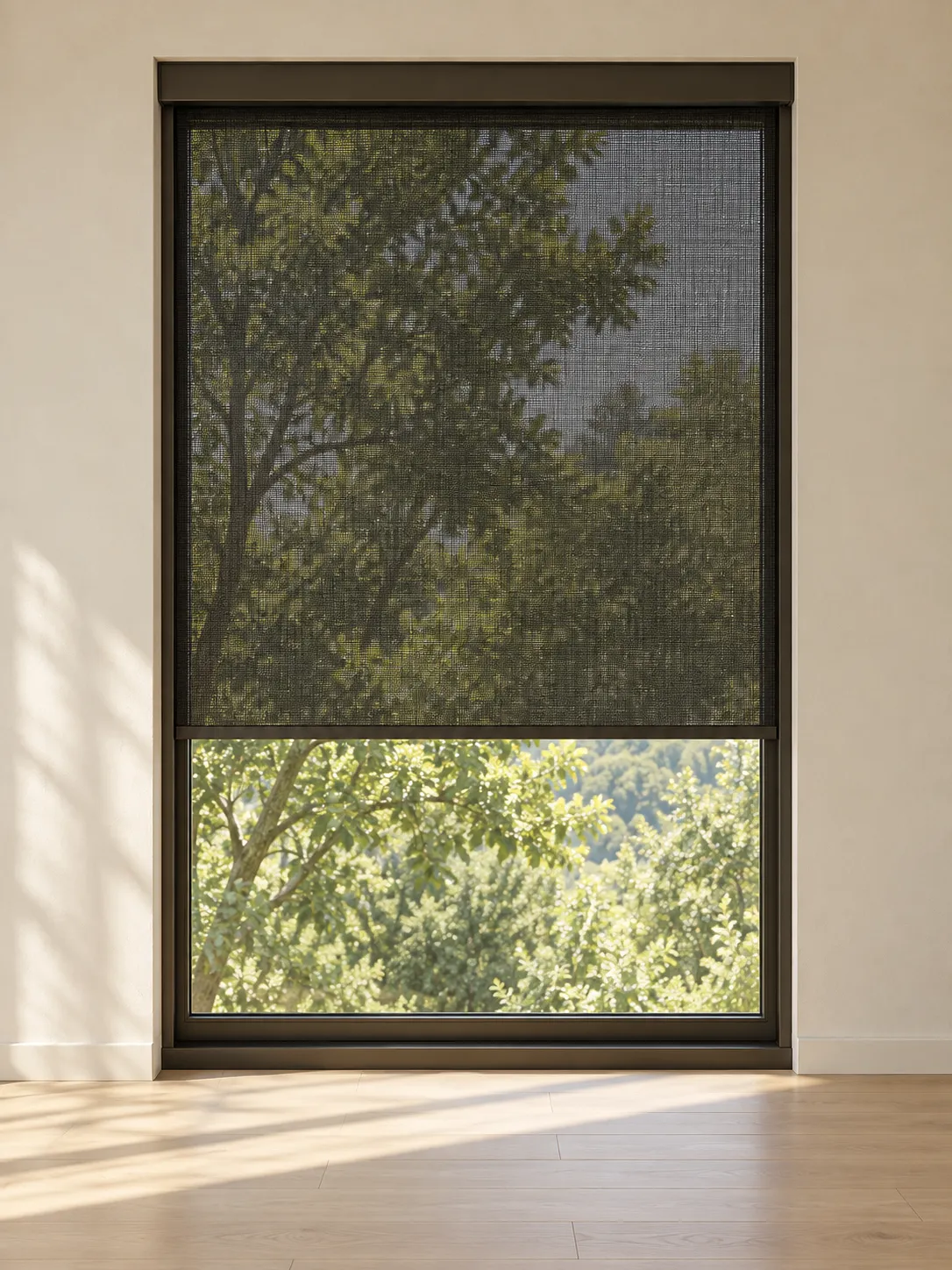
The weave you see through: glare and heat off the glass, view intact.
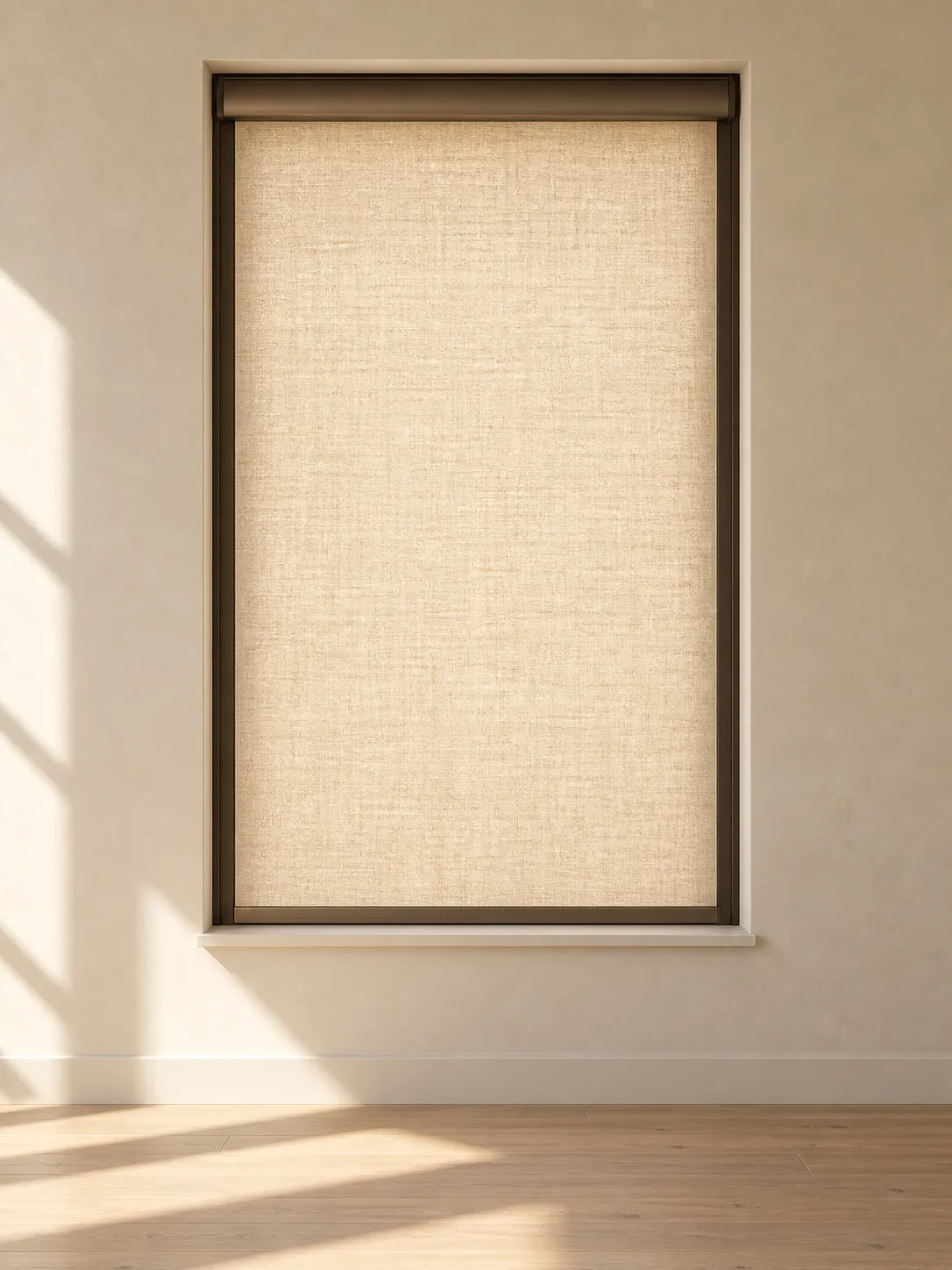
Light-filtering cloths, chosen for the room rather than the elevation.
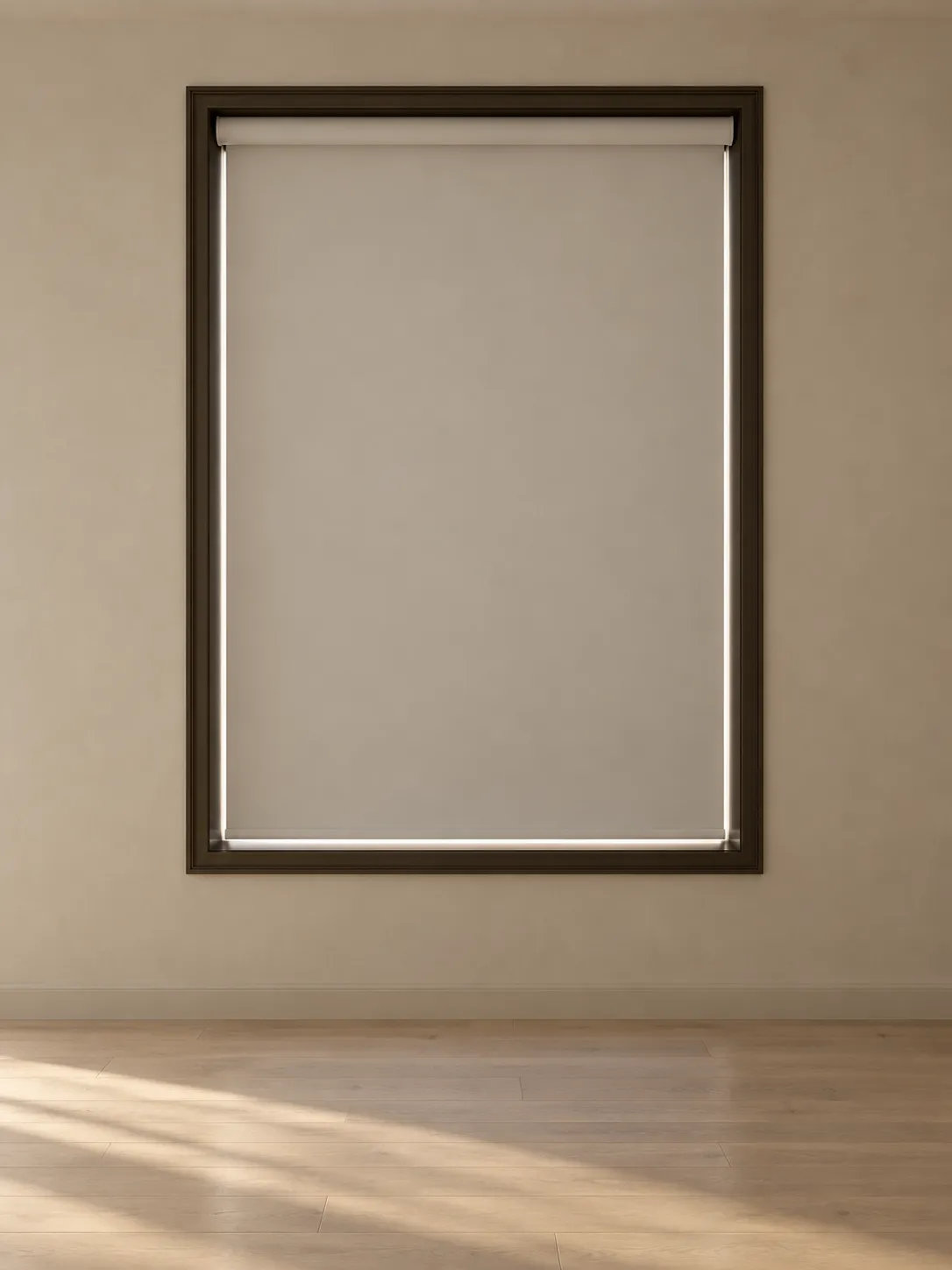
Opaque cloth, and the mount that decides whether the room goes dark.
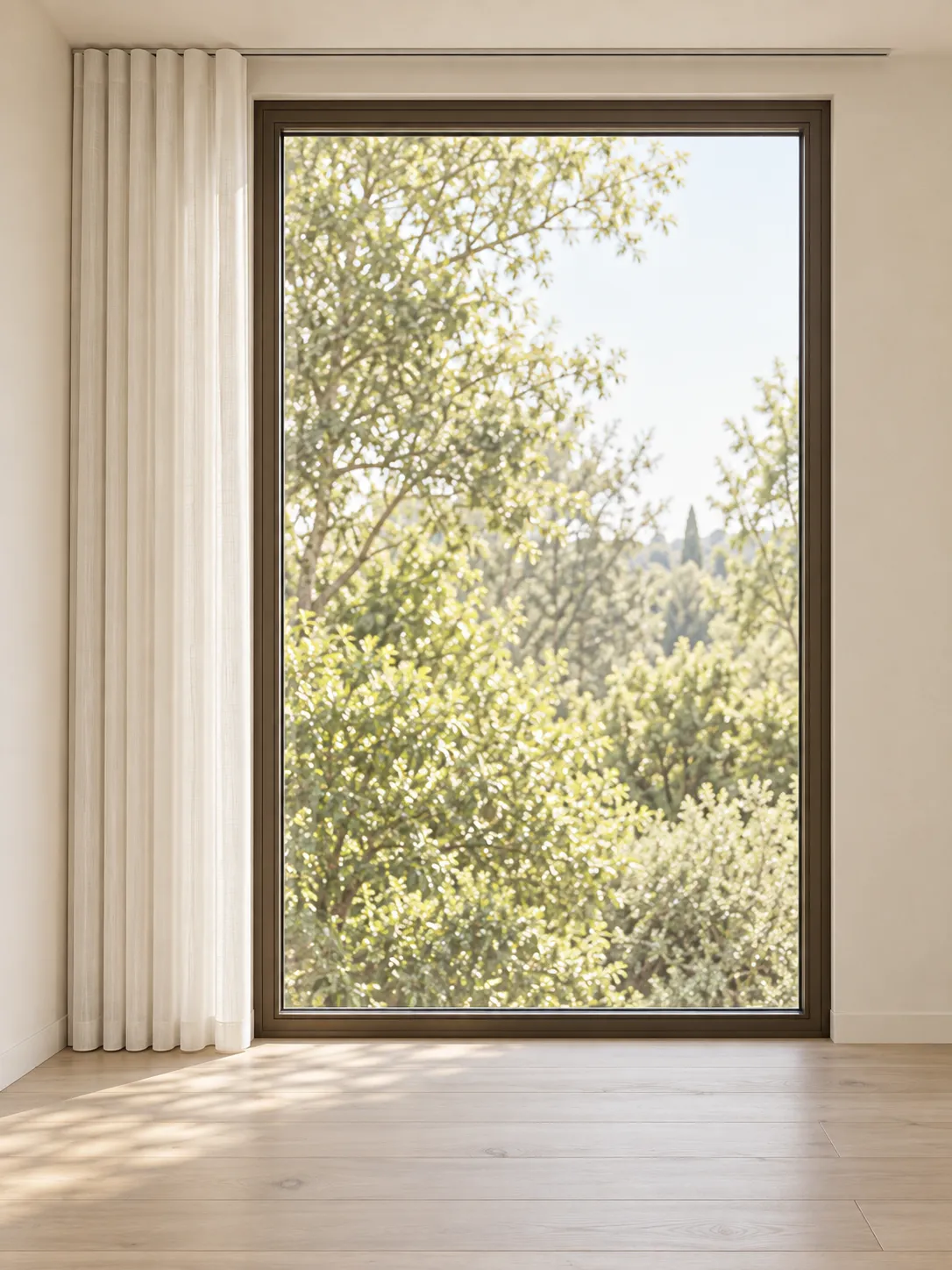
Cloth on a track: an even wave that stacks off the glass, not on it.
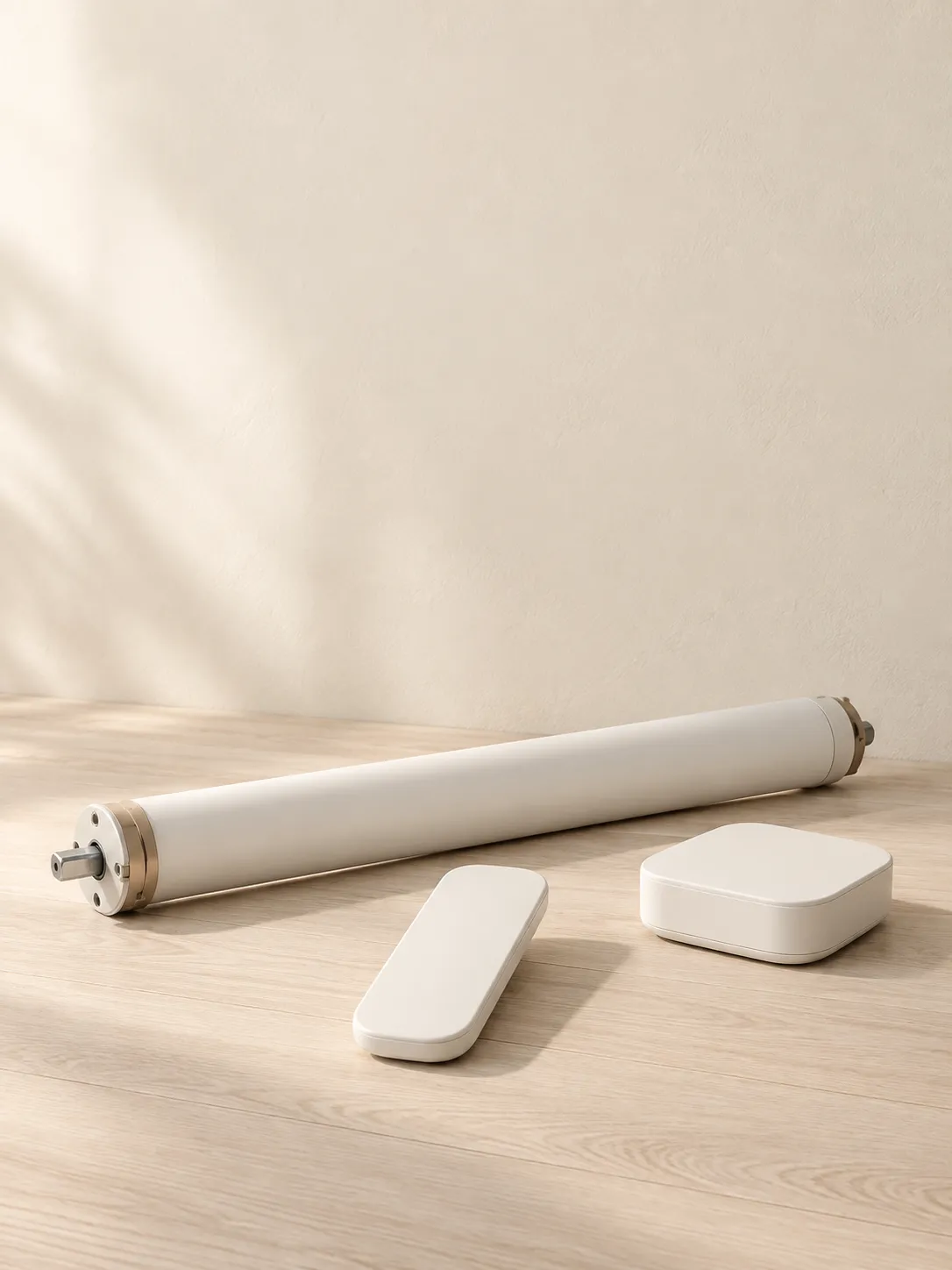
Motors, remotes and hubs: what raises the cloth, and what tells it to.
Tell us which rooms need two settings on one opening and we will price the band against the room.
Get a free estimate