
Rimini
100% PES · 160 g/m²
The lightest of the range. It hangs soft and keeps a room bright, which is what a north window with nothing to fight usually wants.
The light-filtering cloths, where the fabric is chosen for the room rather than for the elevation it is on.
Where this family sits
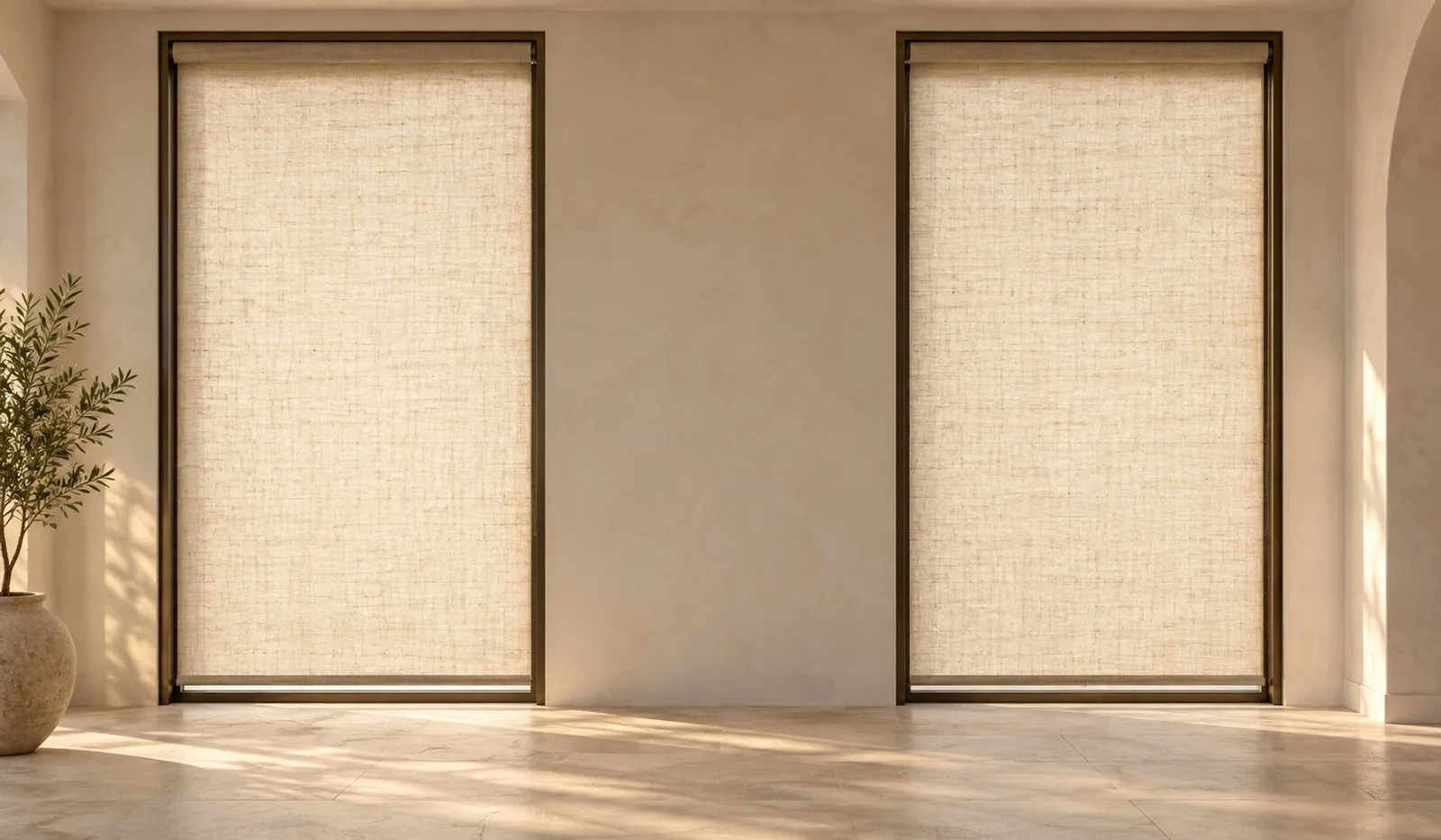
A screen is specified against the sun. A decorative fabric is specified against the room: it diffuses the light rather than metering it, so what you are choosing is the weave, the weight and the colour it throws when the sun is behind it. These are the cloths for the openings a screen would look industrial in — a dining room, a bedroom, a lobby wall that has to read as finished.
The weight is worth reading. At 160 g/m² a fabric hangs soft and lets a lot of light through the cloth; at 275 g/m² it holds a straighter line and reads more solid against the glass. And one blackout sits in this family on purpose: the Pinpointe is a decorative face with a blackout back, for a room that has to go dark without looking like it has a blackout in it.
Eight cloths, ordered by what they do to the light rather than alphabetically. The lighter the weight, the more of the sun comes through the cloth itself.
100% PES · 160 g/m²
The lightest of the range. It hangs soft and keeps a room bright, which is what a north window with nothing to fight usually wants.

100% PES · 185 g/m²
A flat contemporary weave in current neutrals. The safe choice where the shade should not be the thing you notice.

100% PES · 195.8 g/m²
A finer face than the Bimini and a slightly warmer hand. For a room where the cloth is meant to read as a fabric rather than as a blind.

Polyester blend · 212 g/m²
Mid-weight and even. It filters more than the three above it and still lets the window read as a lit surface.
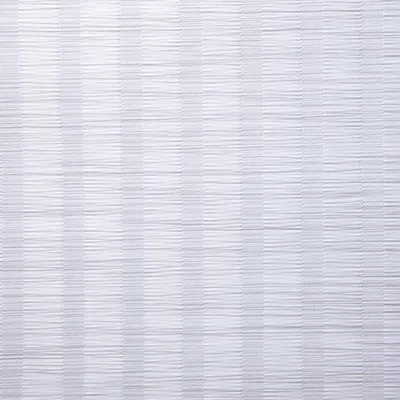
100% PES · multiple colourways
The widest colour selection in the family, which is why it is usually the one specified when the shade has to match something already in the room.
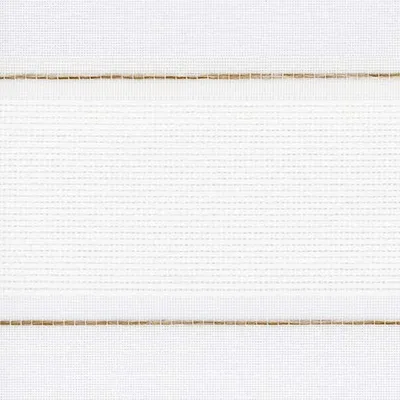
90% PES + 10% linen · solids and traditional weaves
The only cloth here with a natural fibre in it. The linen gives it an irregular texture that a pure polyester cannot fake, and it is the one people choose by touch.
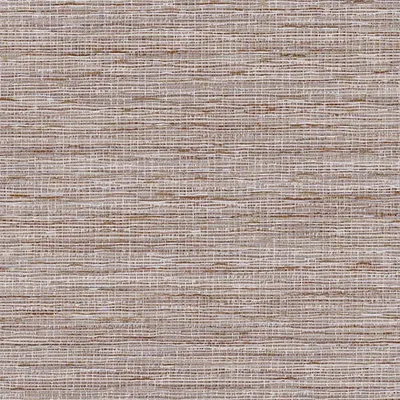
100% PES · around 275 g/m²
The heaviest of the filtering cloths. It hangs straight, reads nearly solid against a bright window, and is the closest this family gets to a dim-out without being one.

65% PVC + 35% PES · 470 g/m² · fire retardant
A decorative face over a full blackout, and the one fabric here rated fire retardant — which is what a commercial specification usually asks for before anything else.
Weights and compositions are the mill’s published figures. Colourways change between runs, so the card is confirmed on the quote rather than promised here.
A room where the shade has to look like part of the room
A screen is a technical object and reads as one. These are cloths, and in a dining room or a bedroom that is the whole difference.
Light softened rather than metered, with no openness percentage to argue about
Texture as the choice: a linen blend, a flat weave, a fine face
Colour matched to what is already in the room rather than to the elevation
A fire-retardant option, for the commercial specification that asks for one
The same roller hardware as the screens, so a house can mix the two families
In this range, yes, with one exception. Seven of the eight cloths filter light; the Pinpointe is a decorative face with a blackout back, and it is grouped here because of the face rather than because of what it does to the light.
It softens it. If the window faces west and the glare is the problem you are actually solving, a screen at 1% or 3% is the right family and this one is not. Plenty of houses use a screen on the west elevation and these fabrics everywhere else.
Ask for the samples with the quote. Weight and composition are on this page, and neither tells you what the cloth looks like with the sun behind it — that is worth deciding with the swatch against your own glass.
It is a property of the cloth, certified by the mill, and it is what a commercial or multifamily specification usually requires. On a house it is rarely asked for, and it is not something the county requires of a window covering.
The rest of the catalog
One set of measurements and one quote whichever of these you land on. What changes is what the cloth does to the light — and, on the last of them, what raises it.
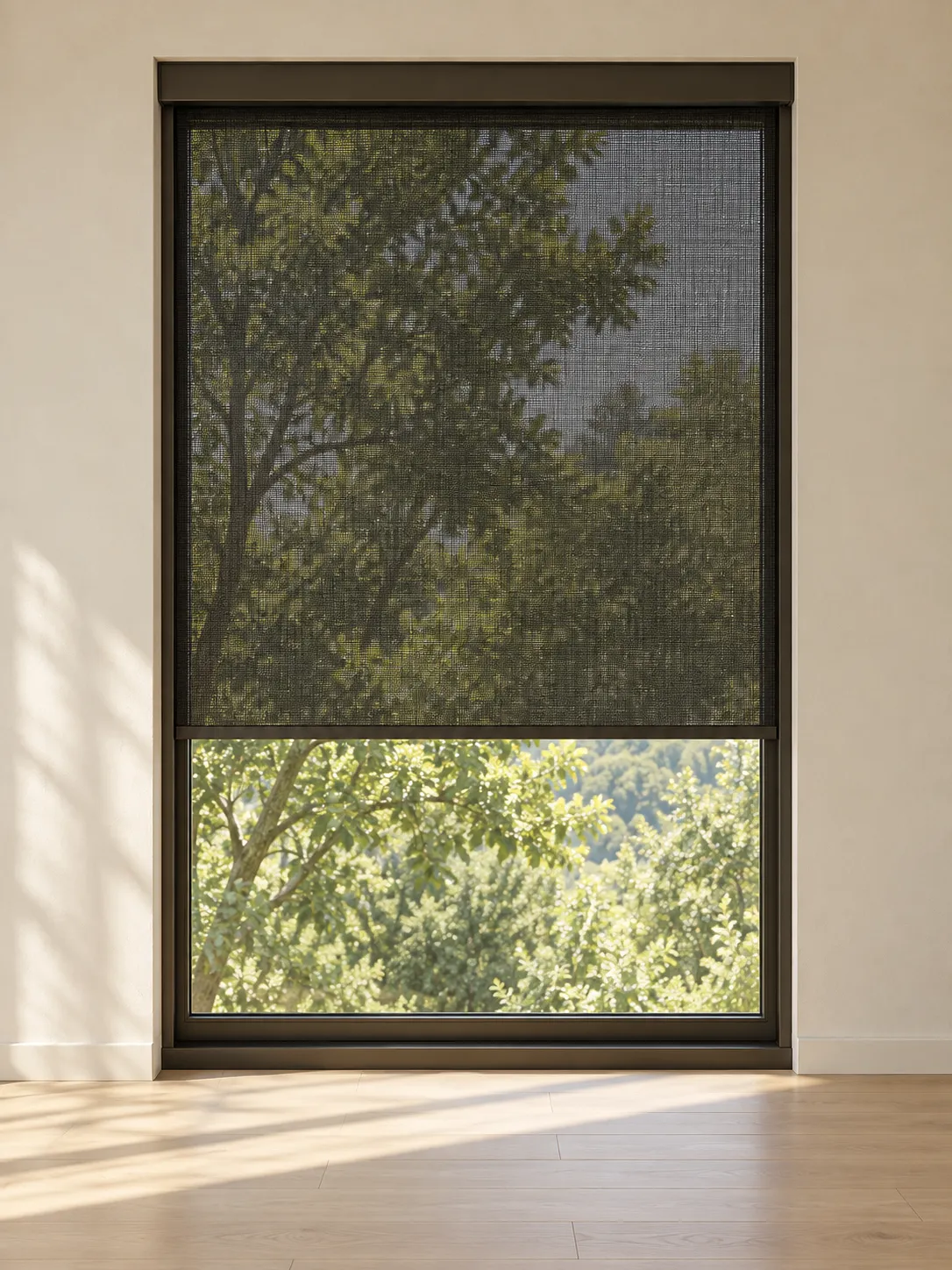
The weave you see through: glare and heat off the glass, view intact.
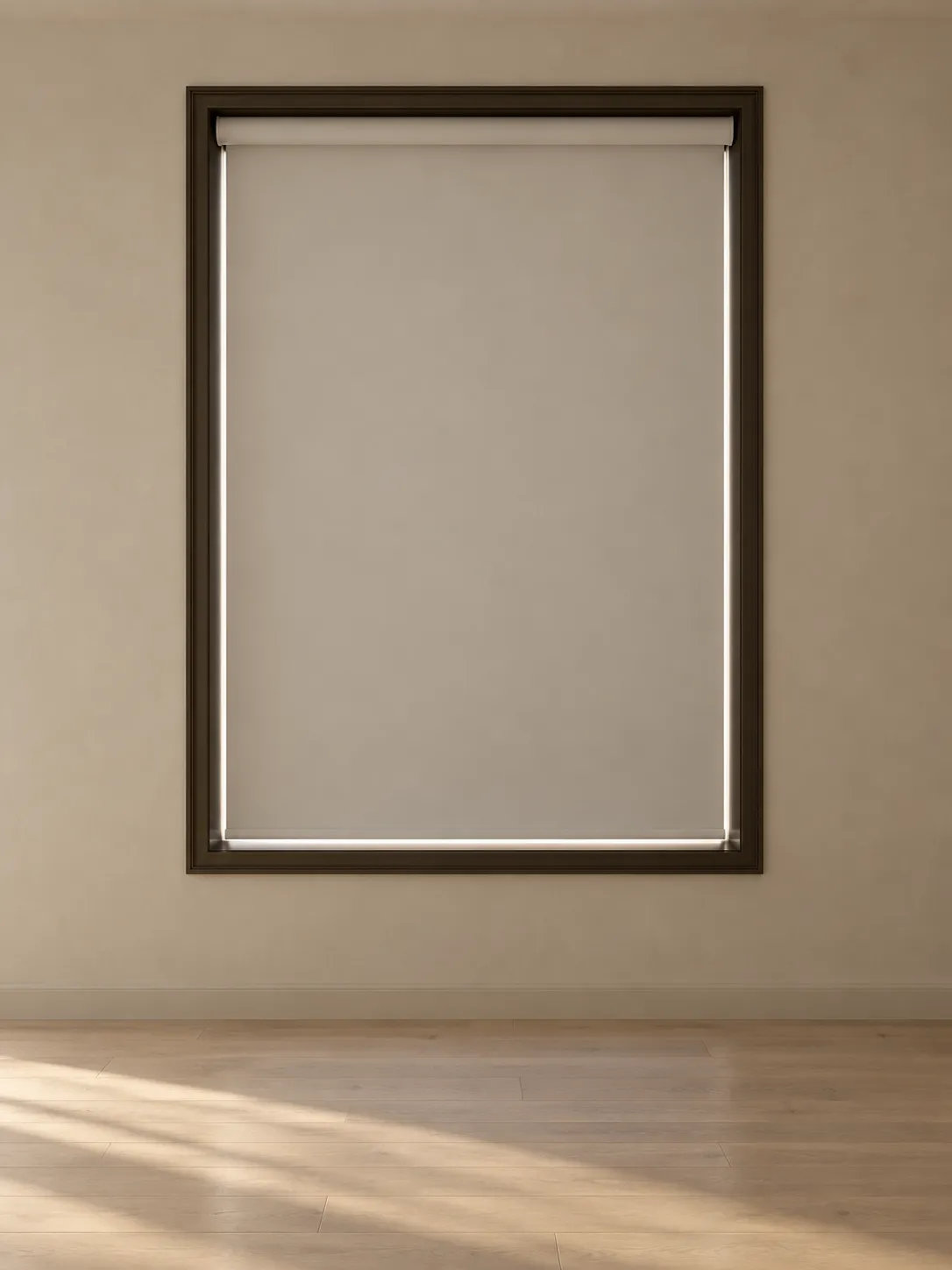
Opaque cloth, and the mount that decides whether the room goes dark.
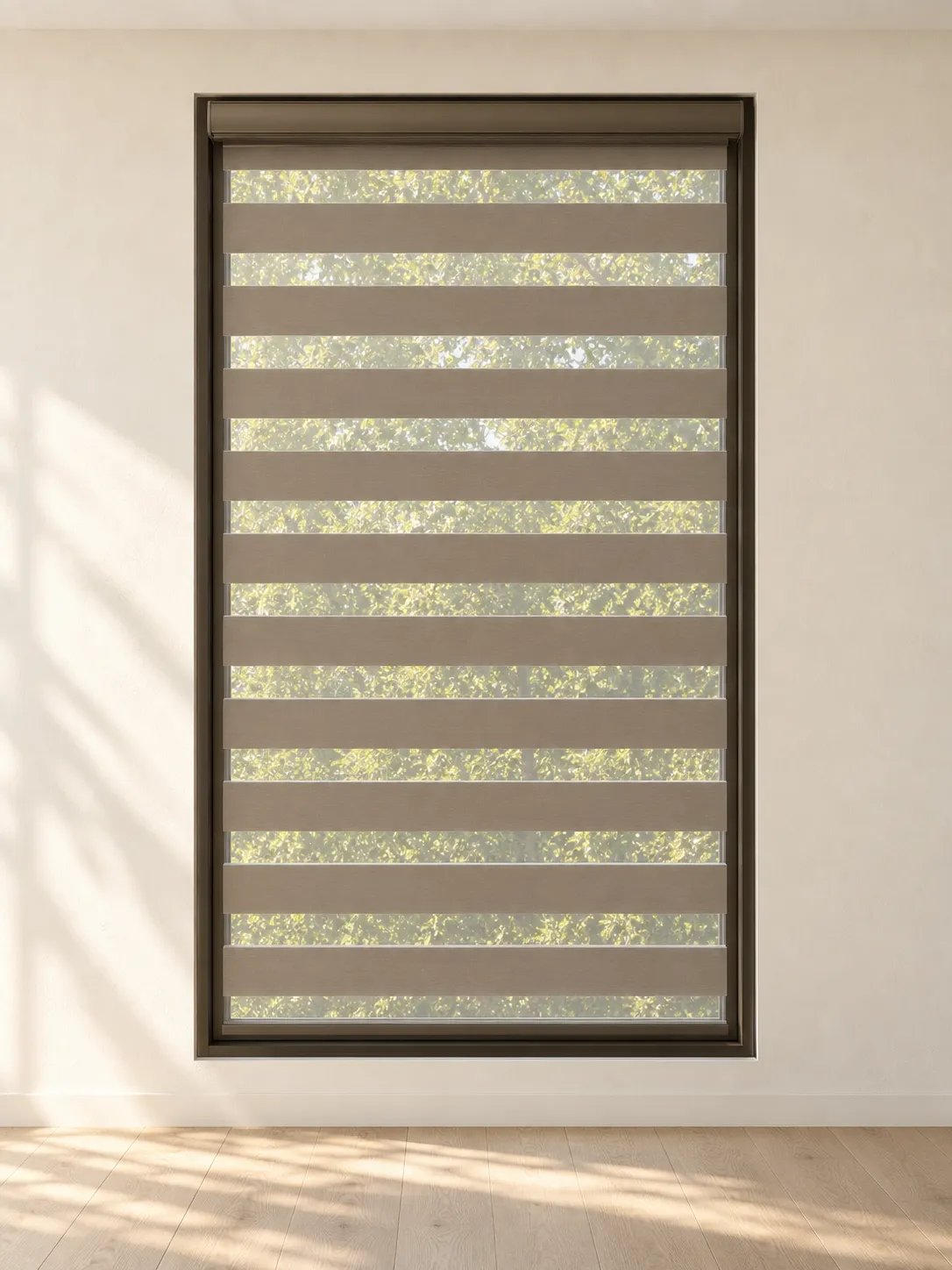
Sheer and solid bands on one roller: two settings, one header.
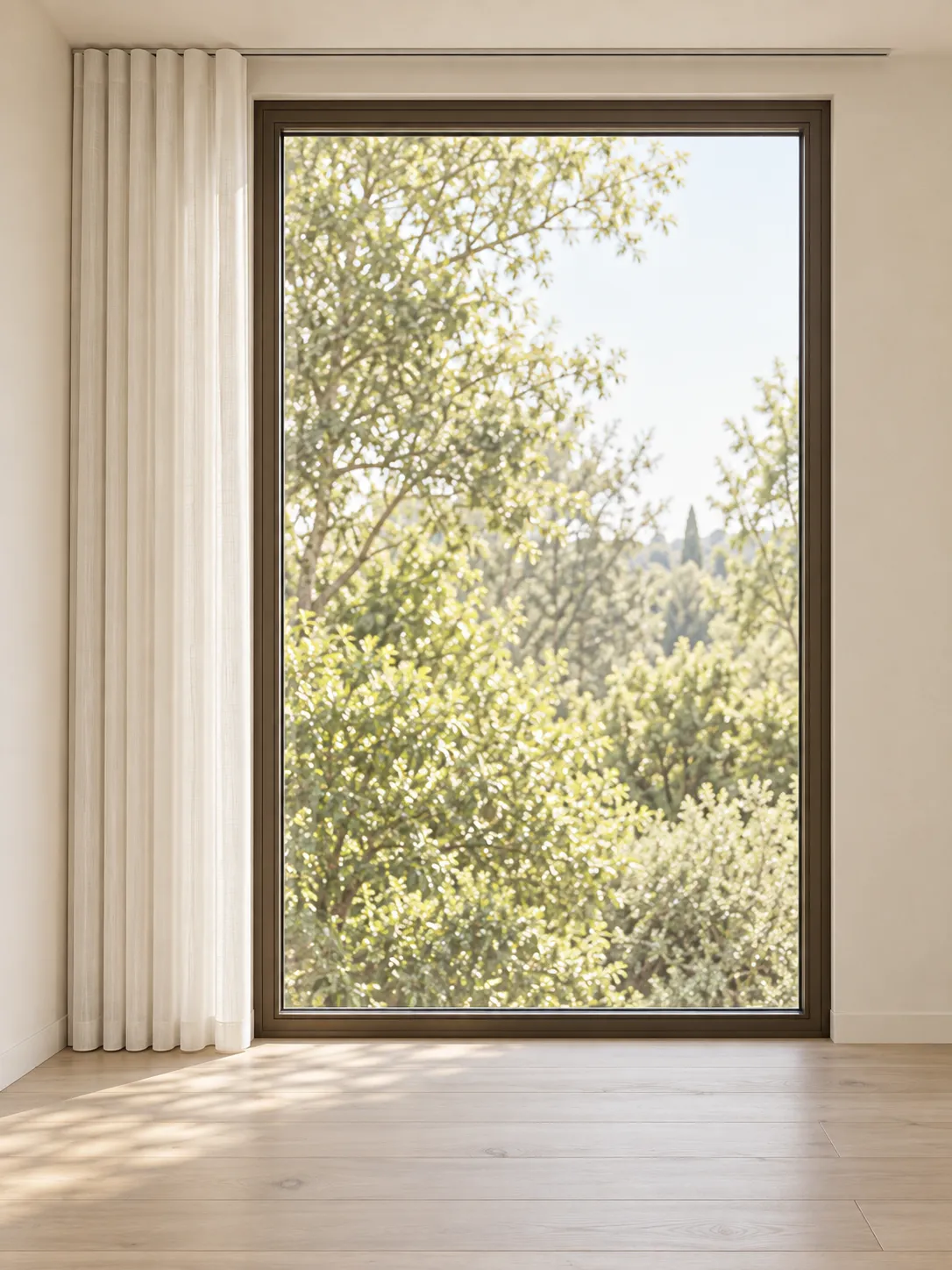
Cloth on a track: an even wave that stacks off the glass, not on it.
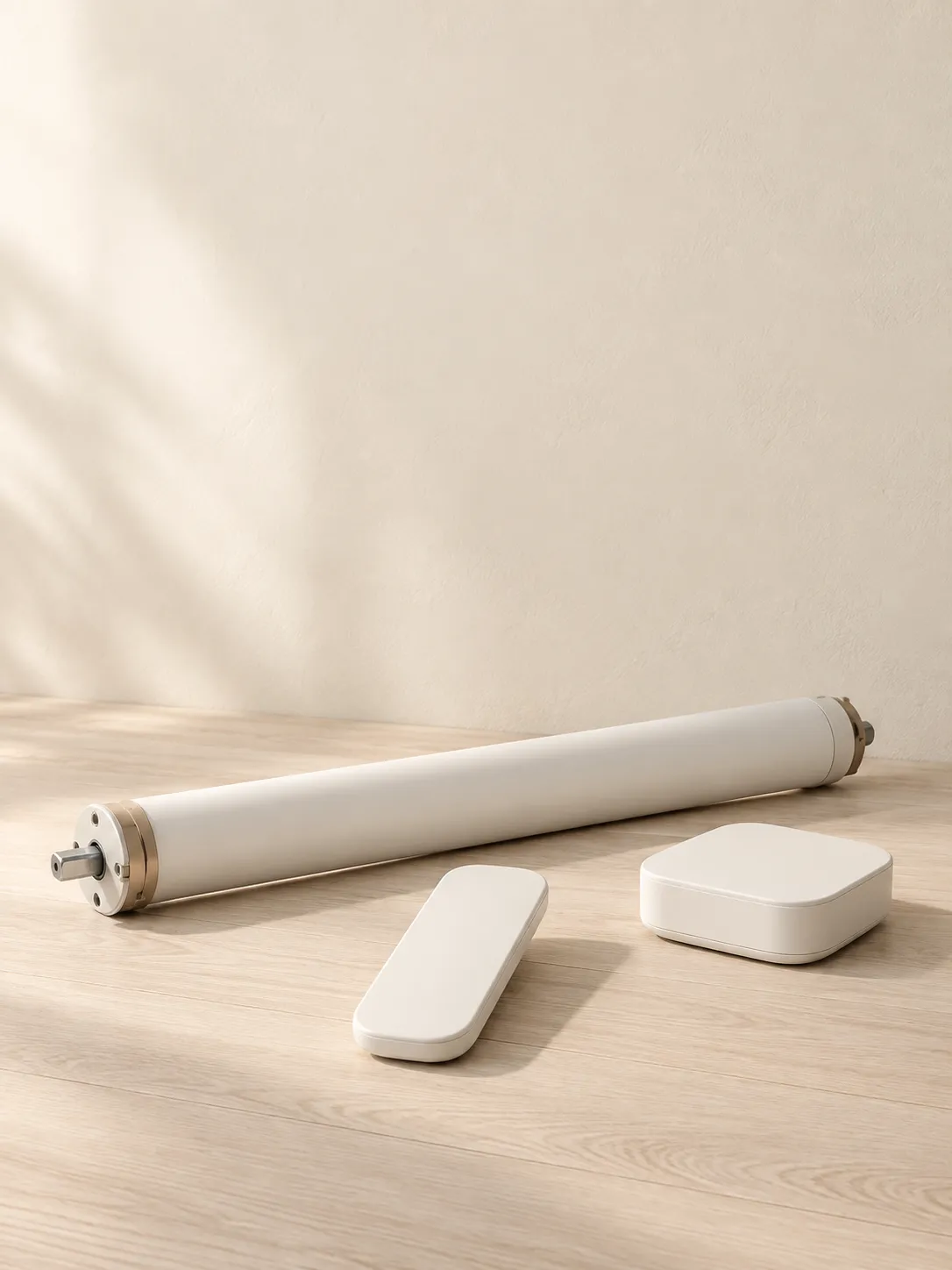
Motors, remotes and hubs: what raises the cloth, and what tells it to.
Tell us the rooms and what is already in them, and we will come back with the cloths that belong there.
Get a free estimate