
Pinpointe Blackout FR
65% PVC + 35% PES · 470 g/m² · fire retardant
The heaviest here and the only one rated fire retardant. It is the default on a commercial or multifamily specification for that reason alone.
The cloths that stop light through the fabric itself. What is left is the gap around them, and that is a hardware question.
What blackout actually means
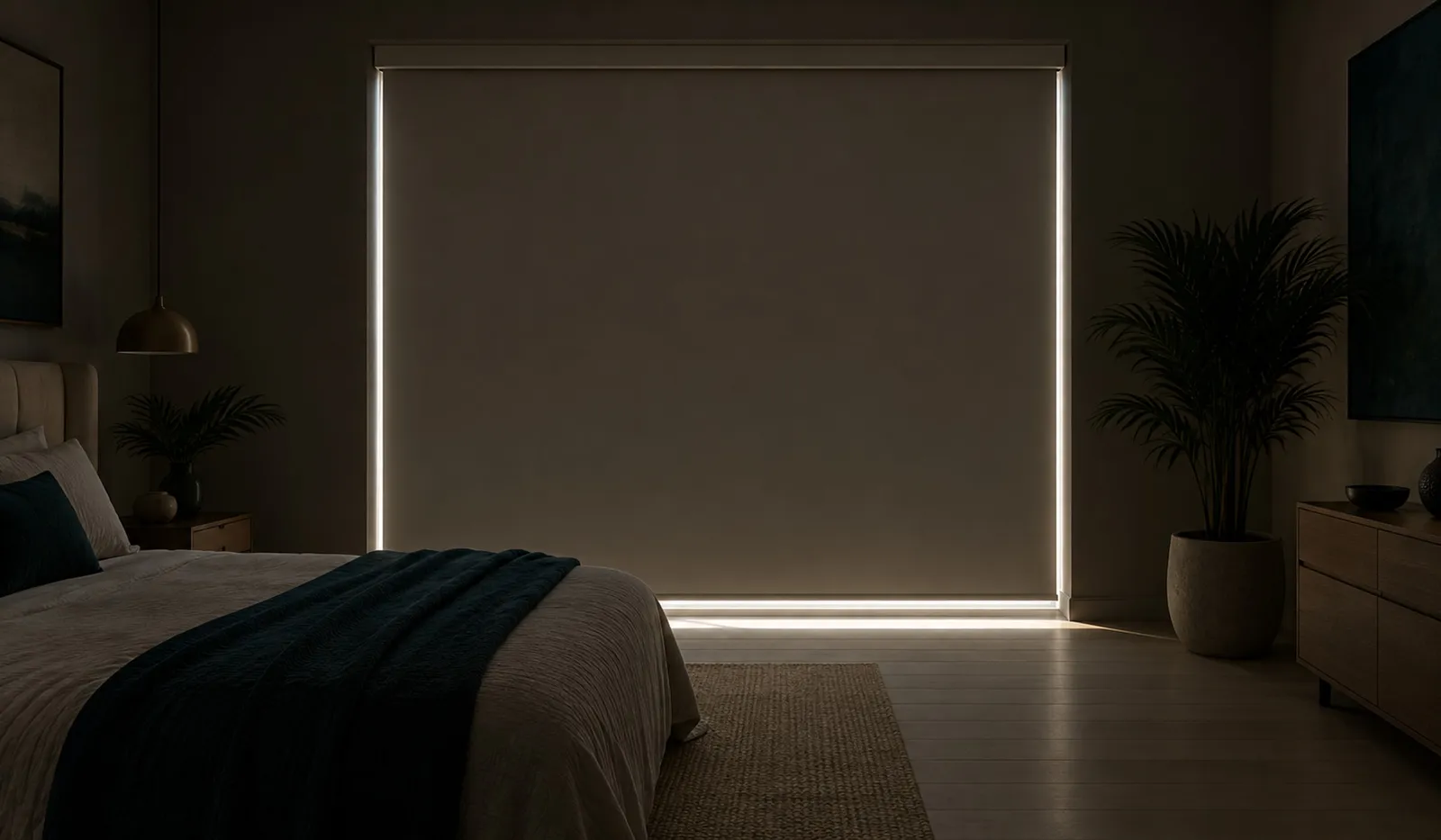
A blackout fabric passes no light at all — hold it to a lamp and you see nothing. That is a property of the cloth and every fabric on this page has it. What none of them can do on their own is close the opening: a roller shade hangs inside or outside the recess and leaves a gap down each side, and that gap is where the light in a "blackout" bedroom is actually coming from.
Closing it is a hardware and measurement decision rather than a fabric one — an outside mount with generous overlap, or side channels on the jamb. It is worth settling before the order, because the fabric is cut to the opening and the two answers are not the same width. Tell us the room has to go properly dark and the measurement is taken for that.
Seven cloths, all opaque. What separates them is weight, thickness and hand — a thicker cloth rolls to a fatter tube and holds a flatter line, a lighter one stacks smaller at the head.
65% PVC + 35% PES · 470 g/m² · fire retardant
The heaviest here and the only one rated fire retardant. It is the default on a commercial or multifamily specification for that reason alone.

100% PES · 400 g/m² · 0.48 mm
A heavy cloth on a moderate thickness, so it hangs flat without building an oversized roll at the head.
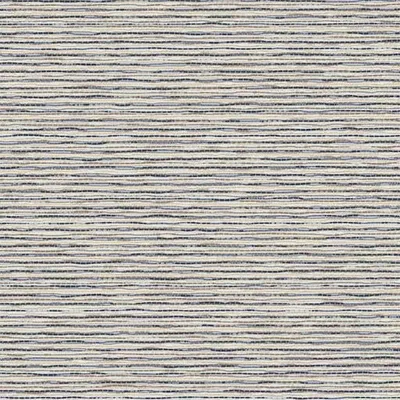
100% PES · 390 g/m² · 0.58 mm
One of the thicker fabrics in the range, with the softer hand that comes with it. For a tall bedroom window where the cloth should not read as a panel.

100% PES · 390 g/m² · 0.50 mm
The blackout back of the decorative cloth of the same name, so a house can run the two families in adjoining rooms and keep one look.

100% PES · 385 g/m² · 0.40 mm
The thinnest cloth on the page. It rolls to the smallest tube, which is what a shallow recess or a stack of shades on one header needs.

100% PES · 356 g/m² · 0.61 mm
The thickest and among the lightest, which is a textured, matte cloth rather than a dense one. It reads as fabric on the wall rather than as a blind.

100% PES · 355 g/m² · 0.51 mm
The lightest here. It is the one to ask for on a wide opening, where every gram is weight the tube and the bracket have to carry across the span.
Weights, thicknesses and compositions are the mill’s published figures. How dark a finished room actually gets depends on the mount and the overlap as much as on the cloth — that is settled at the measurement, and it is measured after the frames are in.
Whether the room has to be dark or merely private
Dark is a fabric plus a mount that closes the gap. Private is a fabric alone, and it is a cheaper, thinner and lighter shade.
Inside or outside mount, because the two are measured to different widths
Side channels, if the light down the jamb is the thing being solved
The recess depth, which is what decides whether a thick cloth will roll into it
Whether it pairs with a screen on the same opening, on one header or two
Manual or motorised, which on a tall or hard-to-reach opening stops being a luxury
Because the cloth is opaque and the opening is not. A roller leaves a gap at each side, and on an inside mount that gap is where all of the light is. Outside mounting with real overlap, or side channels on the jamb, is what closes it — and it has to be decided before the shade is cut.
None of them, in the sense you are asking. Every cloth on this page passes zero light, so the darkness of the finished room is a question about the mount, not about which of the seven you pick. Choose these on weight, thickness and how the cloth looks.
Yes, and it is the usual answer for a bedroom with a view: the screen runs by day, the blackout at night. It needs either a double bracket or a deeper header, so it is a decision taken at the measurement rather than added afterwards.
A little, and it is not why you buy one. Heat is the glass — the impact unit and its low-E coating — and a screen on the outside face of the problem does more for it than an opaque cloth on the inside does.
The rest of the catalog
One set of measurements and one quote whichever of these you land on. What changes is what the cloth does to the light — and, on the last of them, what raises it.
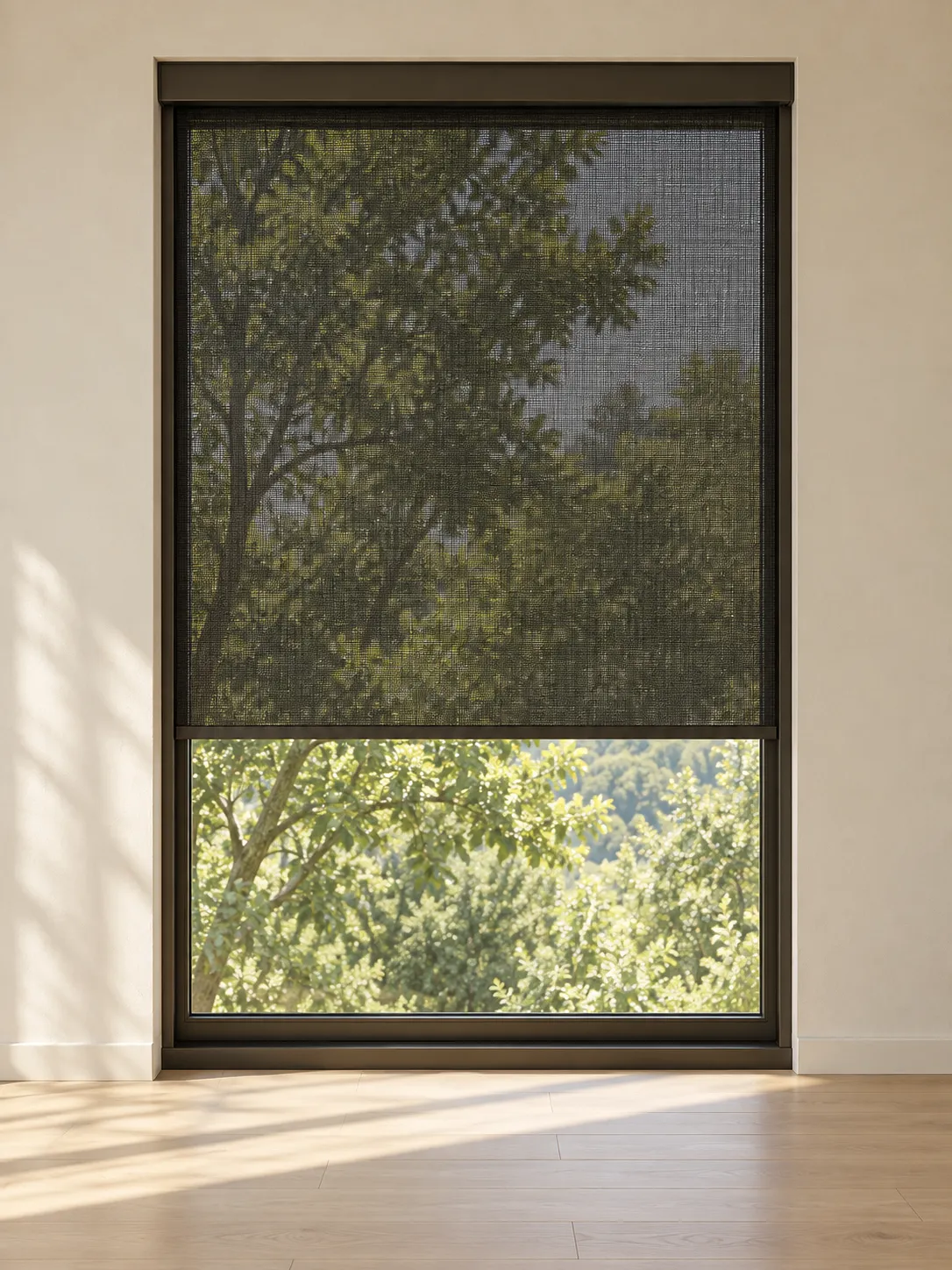
The weave you see through: glare and heat off the glass, view intact.
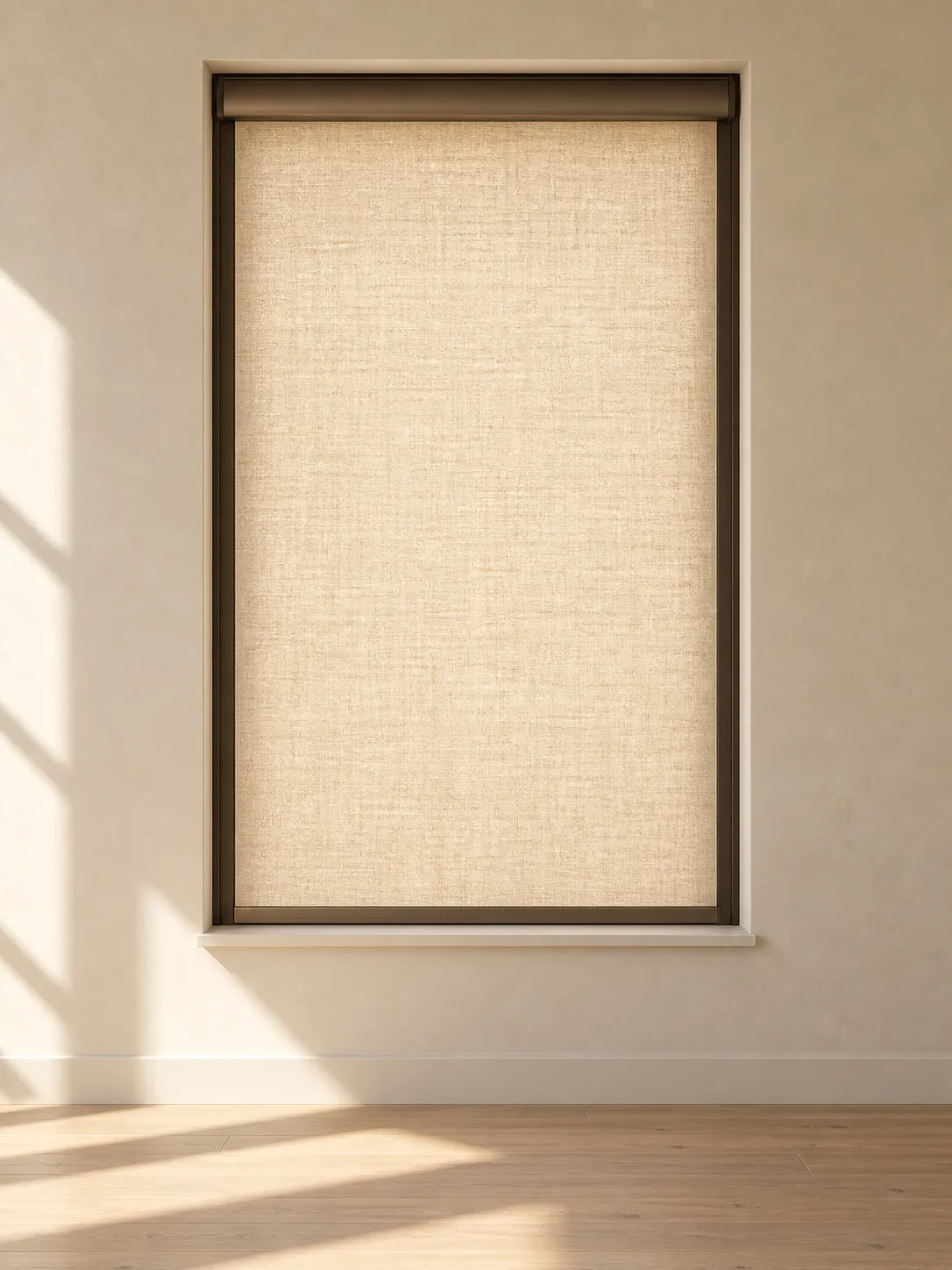
Light-filtering cloths, chosen for the room rather than the elevation.
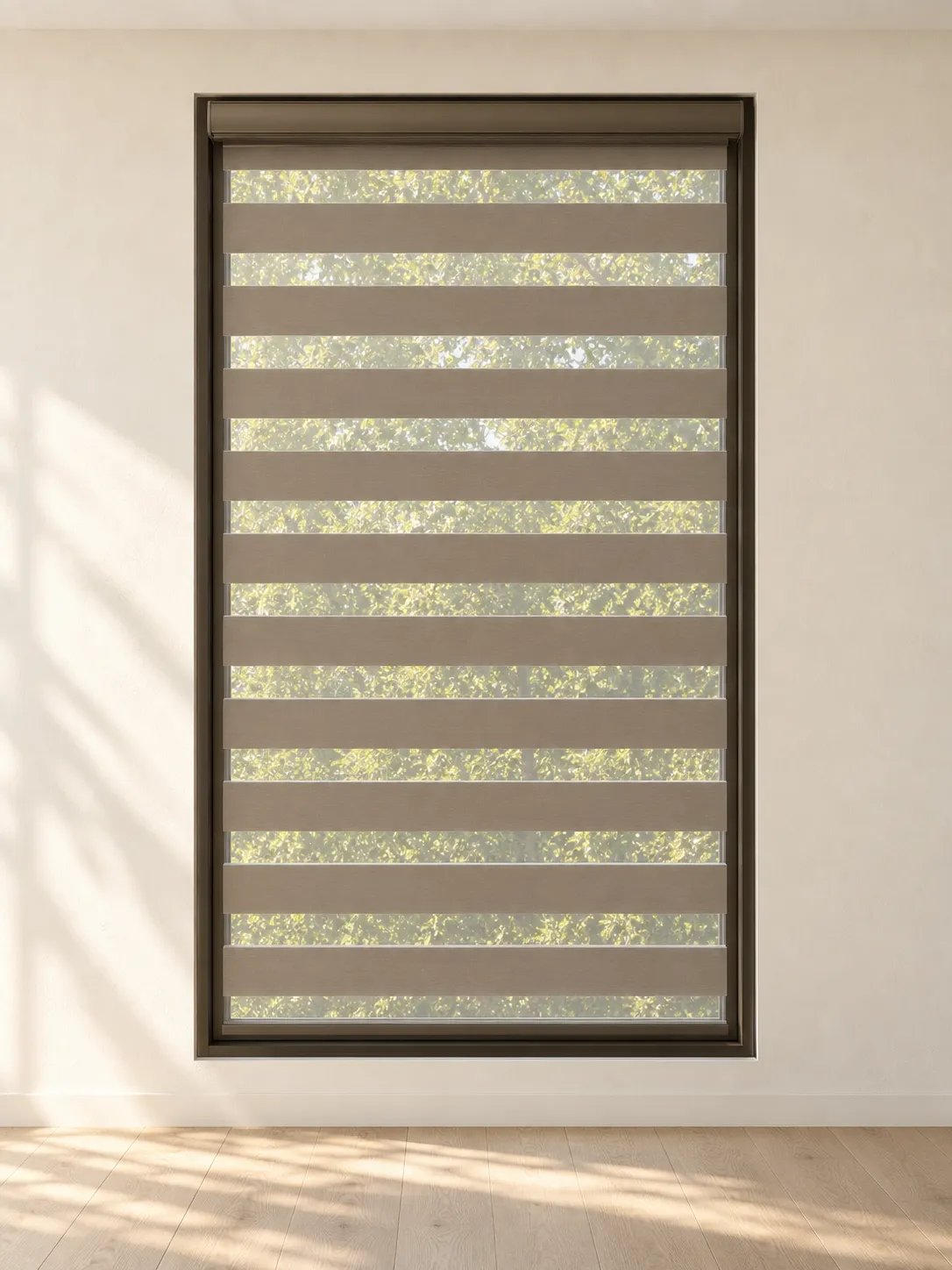
Sheer and solid bands on one roller: two settings, one header.
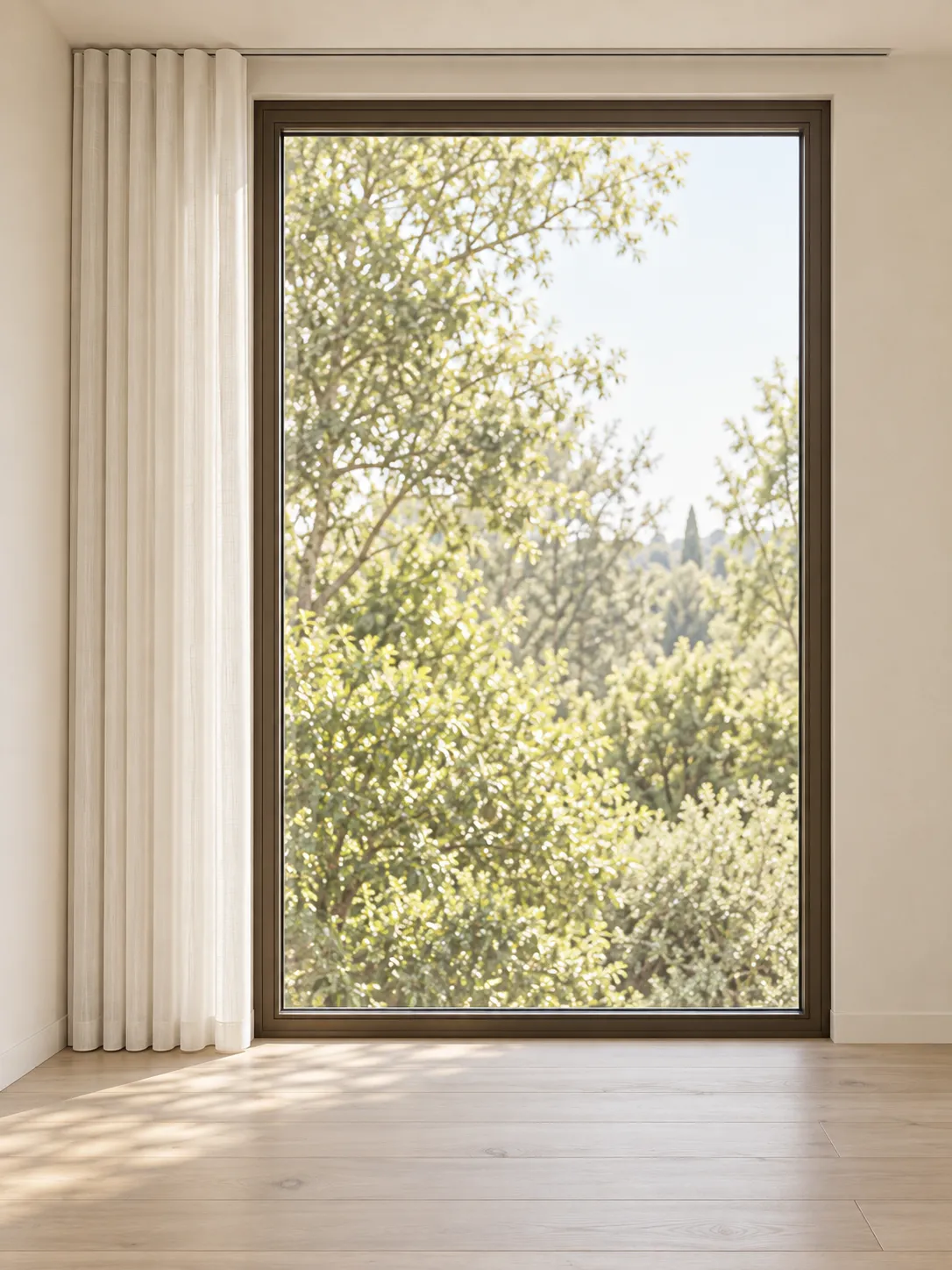
Cloth on a track: an even wave that stacks off the glass, not on it.
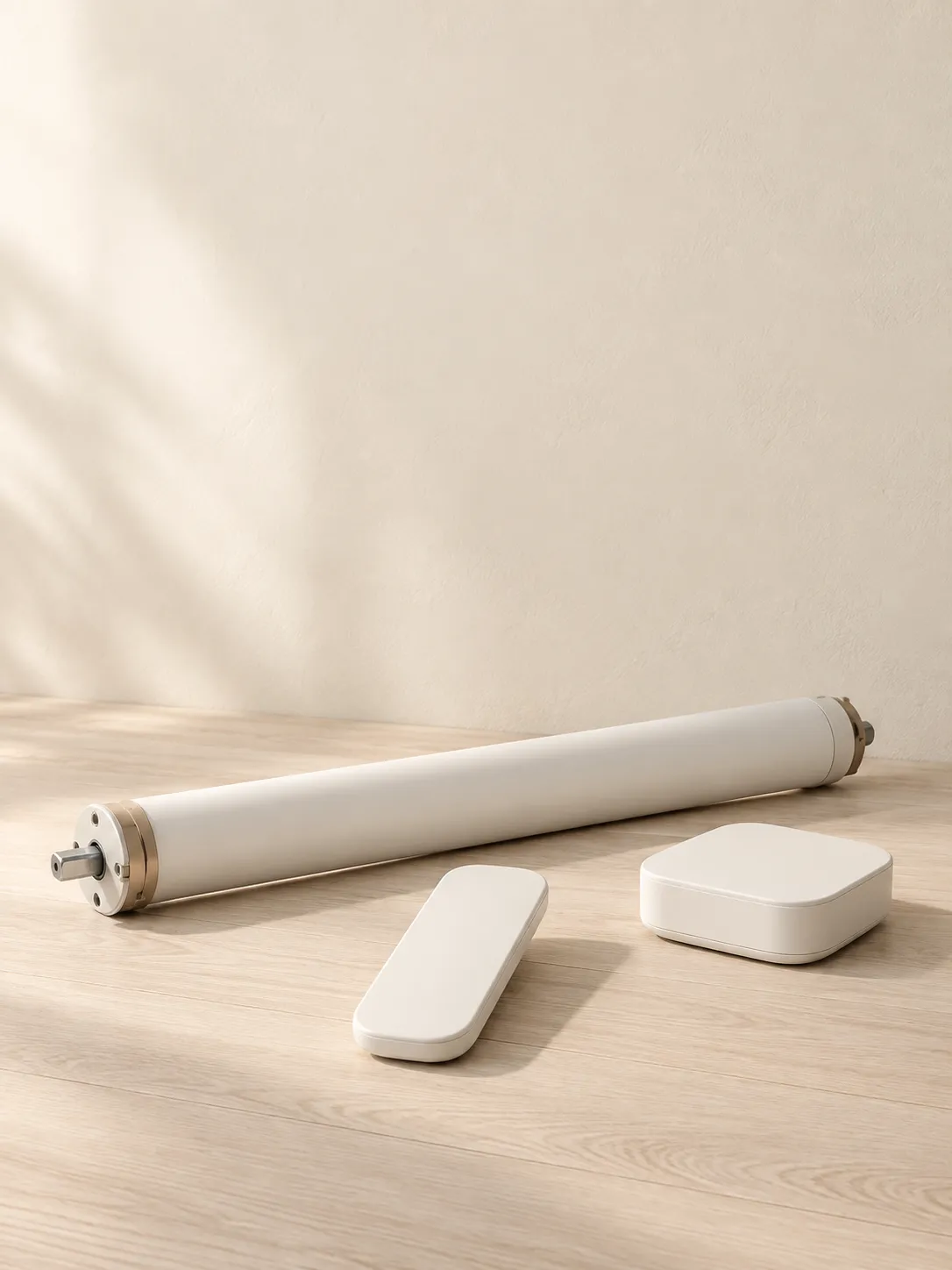
Motors, remotes and hubs: what raises the cloth, and what tells it to.
We quote the cloth and the mount together, because on a blackout the second one is what you are actually buying.
Get a free estimate