
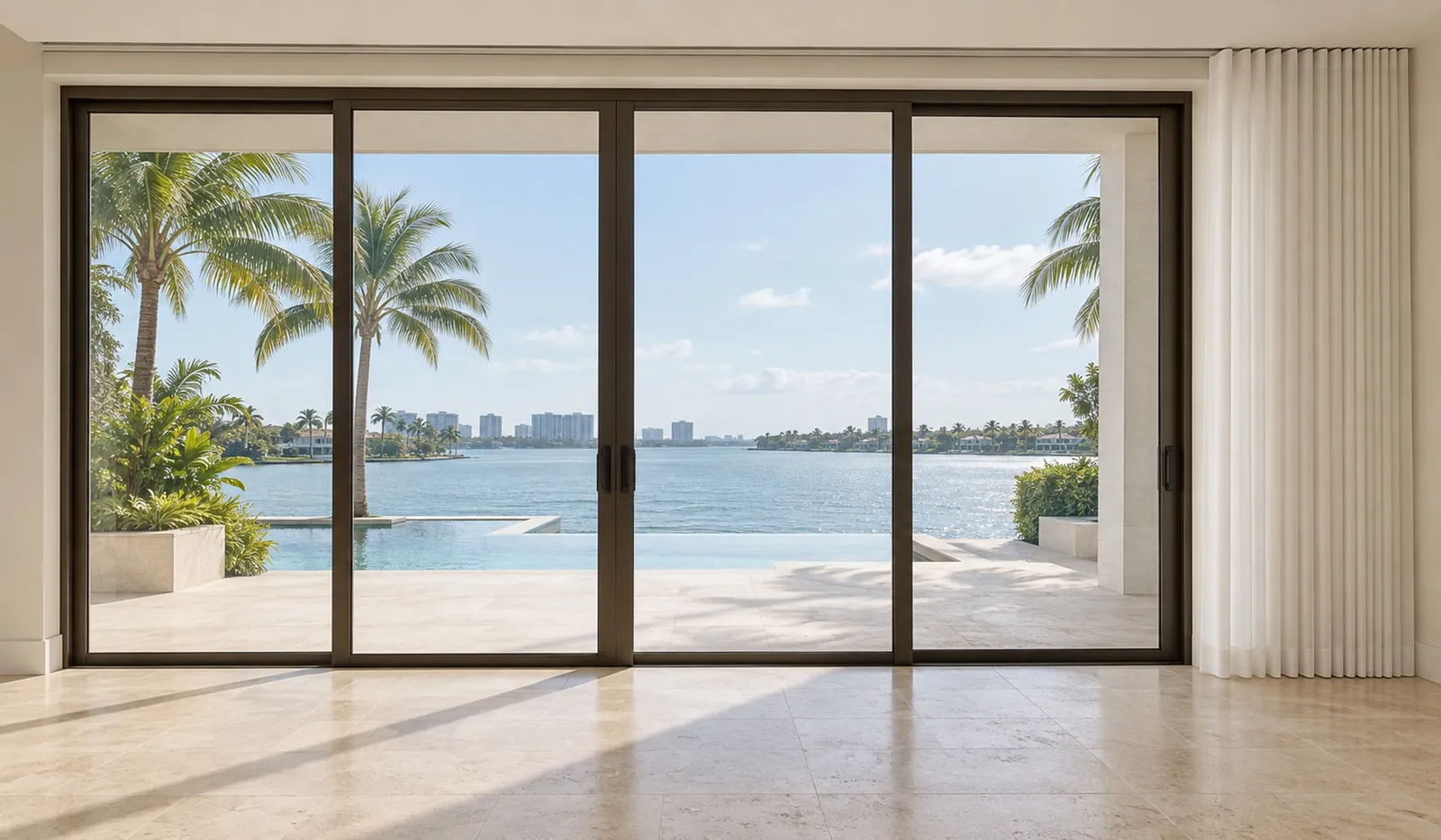

Sheers Lumina
100% PES · 85 g/m² · white, pearl
The lightest cloth on the page. It moves with the room and reads as light rather than as fabric, which is what a tall window usually wants.
Cloth that draws sideways instead of rolling up, hung in an even wave from a track rather than gathered on a rod.
Why the track matters
Ripple fold is a heading system, not a fabric. The cloth is snapped to carriers spaced evenly along a track, so it hangs in a continuous soft wave rather than the pleats and gathers a traditional rod produces — and because the spacing is fixed, the wave is the same at the middle of a twenty-foot run as it is at the end. It is the drapery detail specified in most contemporary Miami interiors for exactly that reason.
It also stacks sideways. A roller lives on the opening whether it is up or down; a drape opens off the glass entirely, which is what a wall of sliding doors usually wants — the shade disappears at the jamb instead of sitting as a tube above the head. The choice inside the family is what the cloth does to the light, and it runs the whole way from an 85 g/m² sheer to a coated blackout at 430.
Thirteen cloths in two groups. The sheers are what a ripple fold is usually specified in; the blackouts and dim-outs are for the openings the room actually has to close.
100% PES · 85 g/m² · white, pearl
The lightest cloth on the page. It moves with the room and reads as light rather than as fabric, which is what a tall window usually wants.
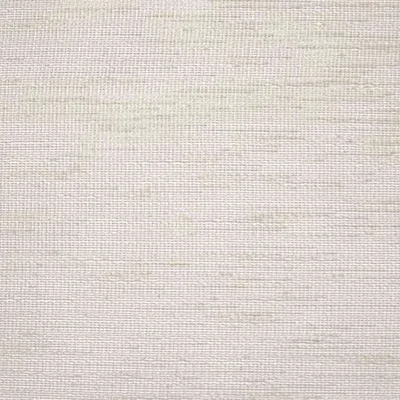
100% PES · 87 g/m² · grey, beige
A fine, even sheer with a little more body than the Lumina, so the wave holds its shape on a long run.

100% PES · 90 g/m² · smoke, bone
A smooth face with almost no texture. The one to specify when nothing about the drape should draw attention.
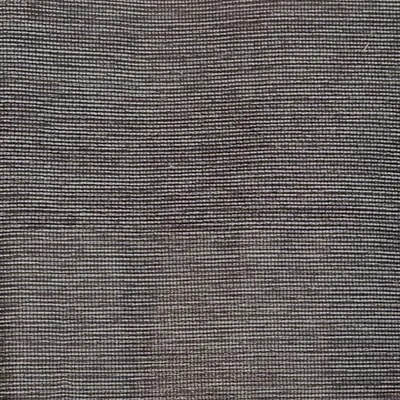
Polyester and linen blend · 100 g/m²
The textured sheer of the group. The linen content gives it an irregular face that catches the light instead of diffusing it flat.

100% PES · 130 g/m² · light grey, beige
Mid-weight for a sheer, so it filters noticeably more of the sun while still being one.
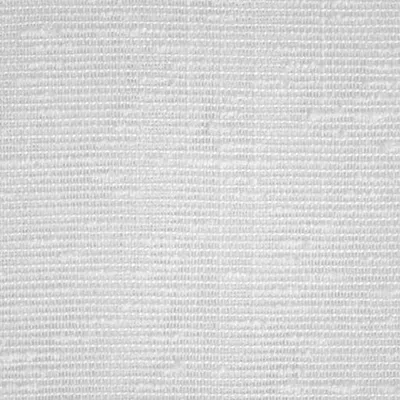
100% PES · 140 g/m² · off-white, ecru
Heavier again, and the warmest of the neutrals here. It hangs with real weight in the fold.

100% PES · 160 g/m² · sand, bone
The heaviest sheer in the range. Closed it reads nearly as a light filter, which suits a west-facing wall of glass.

Multiple colourways
The widest colour selection of the sheers, which is why it is usually the one chosen when the drape has to match something already in the room.

200 g/m² · grey, greige
The light way into a dark drape. It dims the room without the weight and the roll of a coated blackout.
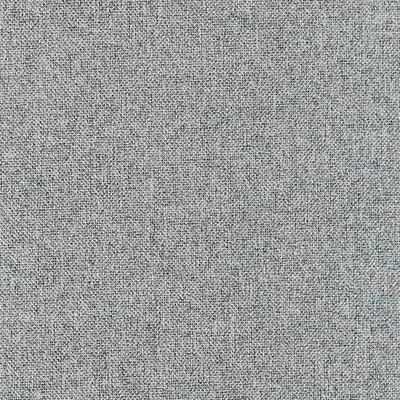
100% PES · 290 g/m²
A plain blackout cloth at a moderate weight, for an opening that has to close and does not need the drape to be a feature.
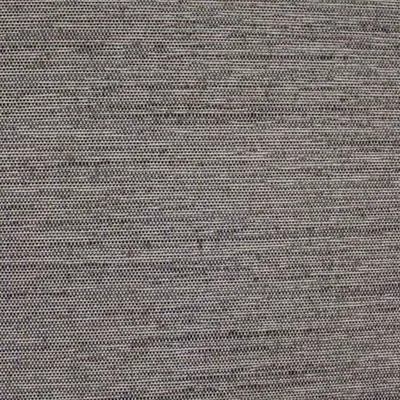
Blend with acrylic coating · 335 g/m² · pearl, honey
A decorative face over a blackout coating, in the warmer neutrals. It closes the room and still reads as a fabric.
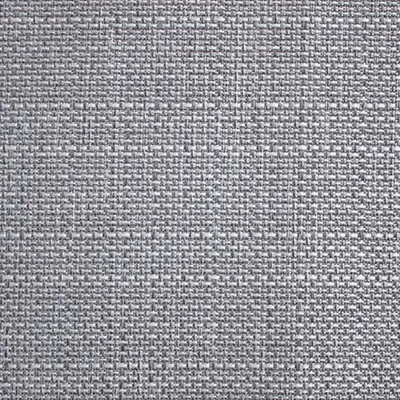
Coated · 355 g/m² · ivory, fossil
The same construction as the Night I in cooler tones and a little more weight, so the fold hangs straighter.

Polyester with acrylic coating · 430 g/m² · cloud, charcoal
The heaviest cloth on this page. It gives the deepest fold and the most substantial drape, and the track has to be specified for the weight.
Weights and compositions are the mill’s published figures. The track, the carrier spacing and the stack width are sized to the opening on the quote, and the final measurement is taken once the frames are in.
A wall of sliding glass, where the covering should clear the opening
A roller sits on the glass whether it is up or down. A ripple fold stacks at the jamb, so an open door is an open door.
Ceiling height, where a soft vertical line does more for a room than a tube does
An even wave from end to end, which a rod and rings cannot hold on a long run
Sheer by day and blackout at night, as two drapes on a double track
Acoustics: cloth on a wall of glass takes the hardness out of a bare room
Manual or motorised, and on a run this wide motorised is the usual answer
The heading. The cloth is snapped to carriers at a fixed spacing on a track, so it hangs in a continuous even wave instead of pleats gathered on a rod. The spacing is what keeps the fold identical across a long run.
A stack, and the width of it depends on the cloth and the run. It is calculated on the quote, because it is the number that decides whether the drape clears the glass or sits over the last panel of it.
Yes, on a double track — the usual specification for a bedroom with a view. It has to be planned before the track is ordered, since a double track is a different piece of hardware and a deeper header.
It is the covering most people end up with there, because it stacks off the panels instead of hanging on them. Nothing about the drape touches the door’s approval — protection is the glass, the frame and the anchoring, and the drape is a cloth on the inside of it.
The rest of the catalog
One set of measurements and one quote whichever of these you land on. What changes is what the cloth does to the light — and, on the last of them, what raises it.
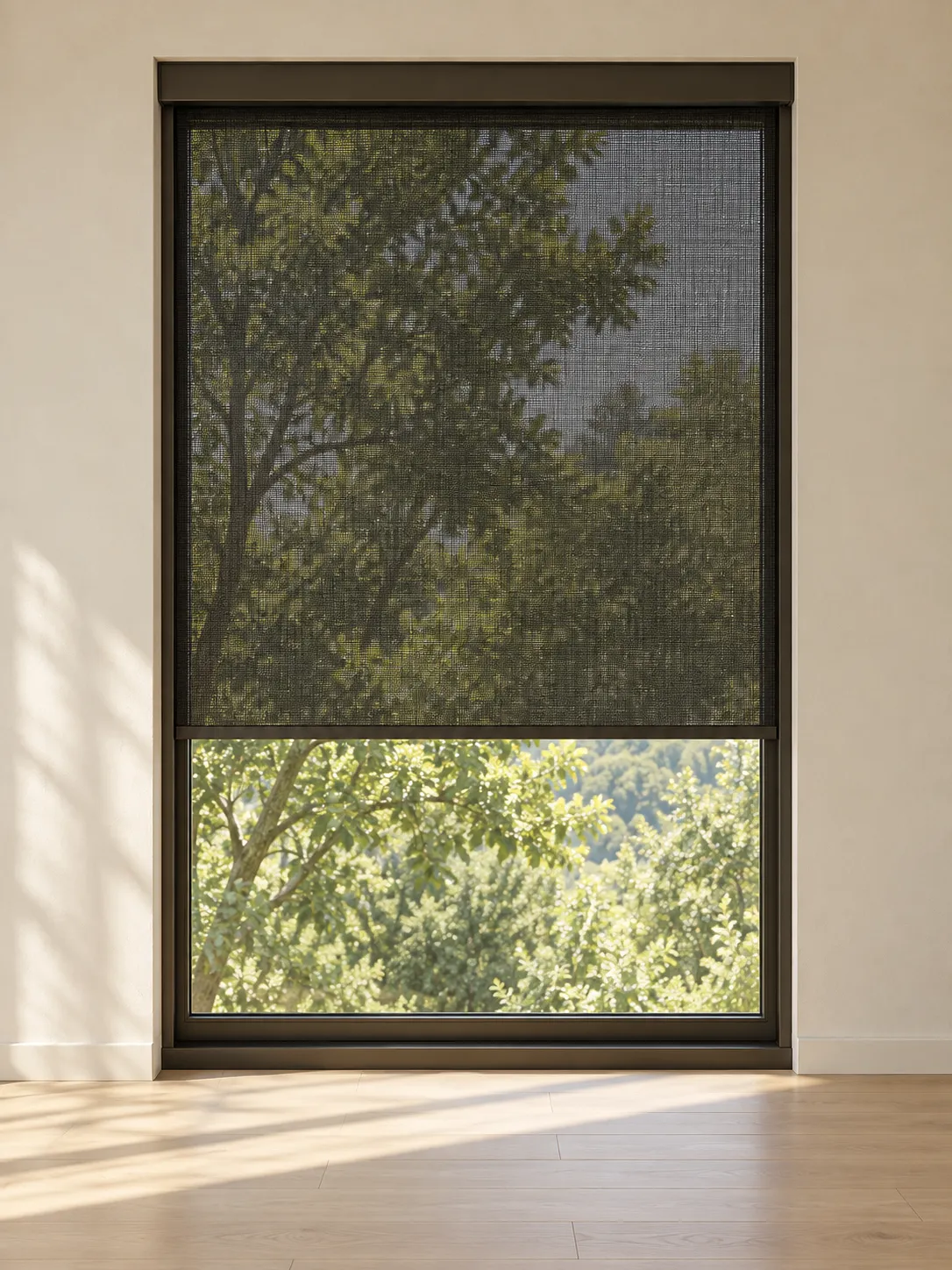
The weave you see through: glare and heat off the glass, view intact.
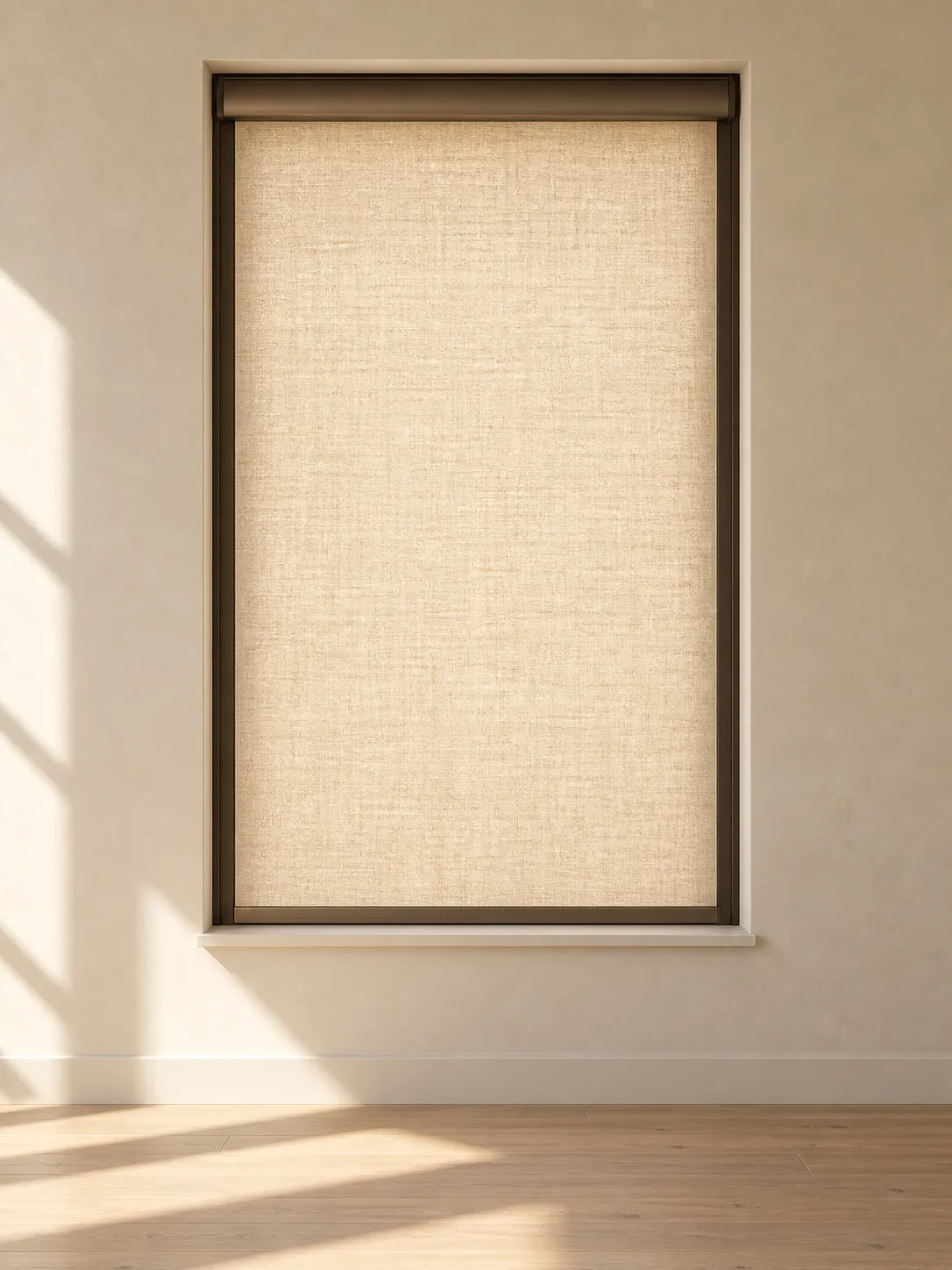
Light-filtering cloths, chosen for the room rather than the elevation.
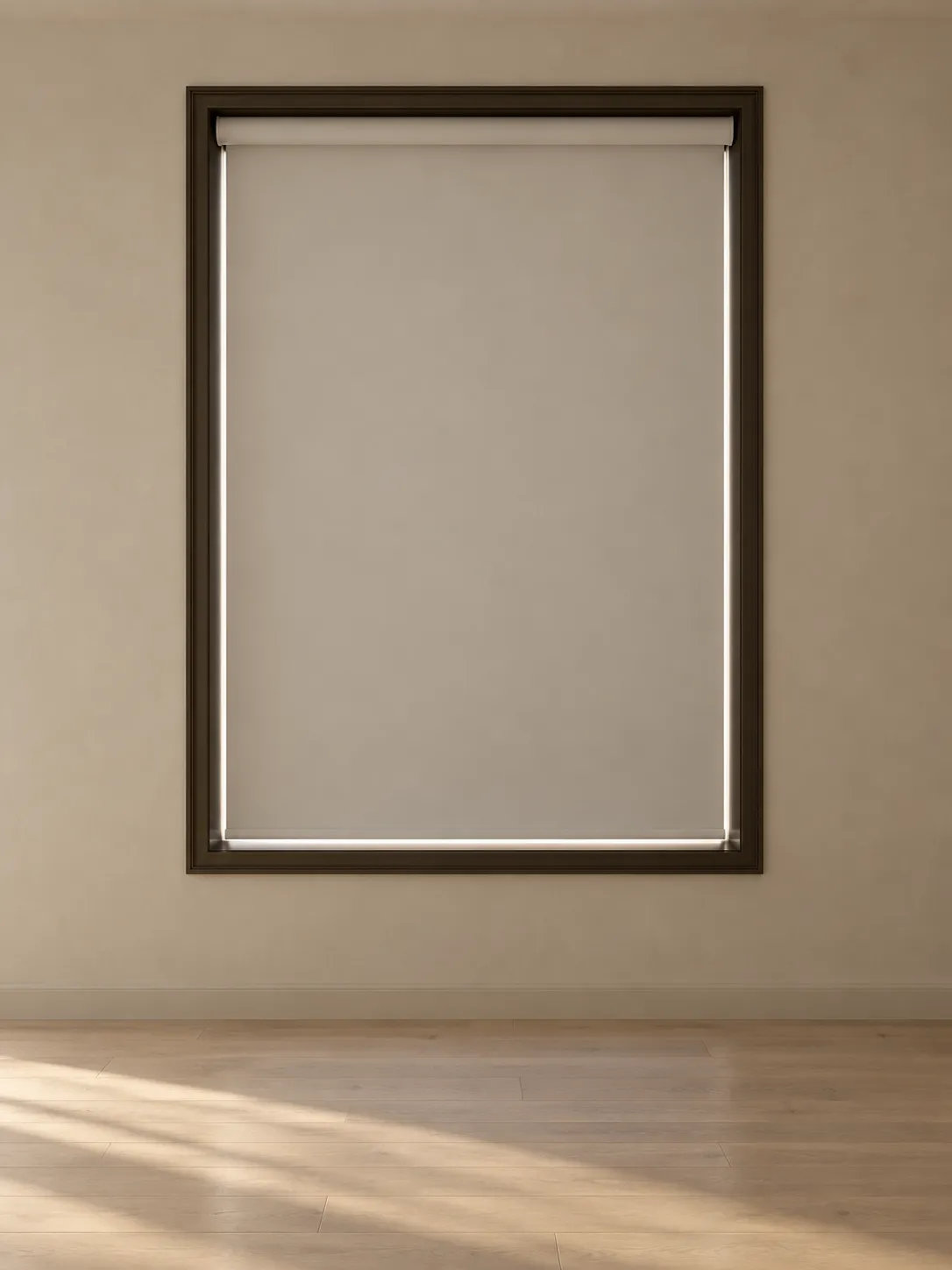
Opaque cloth, and the mount that decides whether the room goes dark.
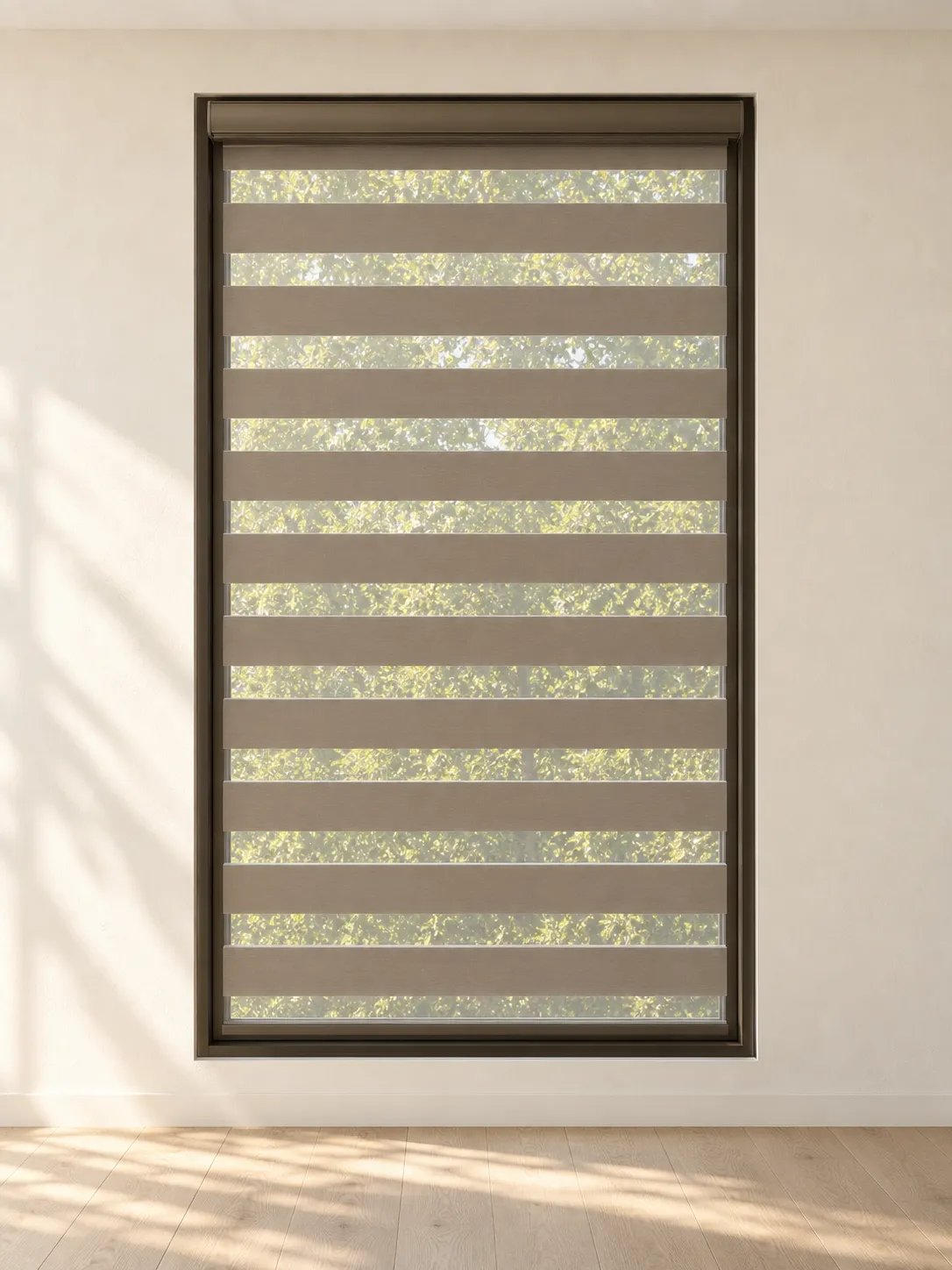
Sheer and solid bands on one roller: two settings, one header.
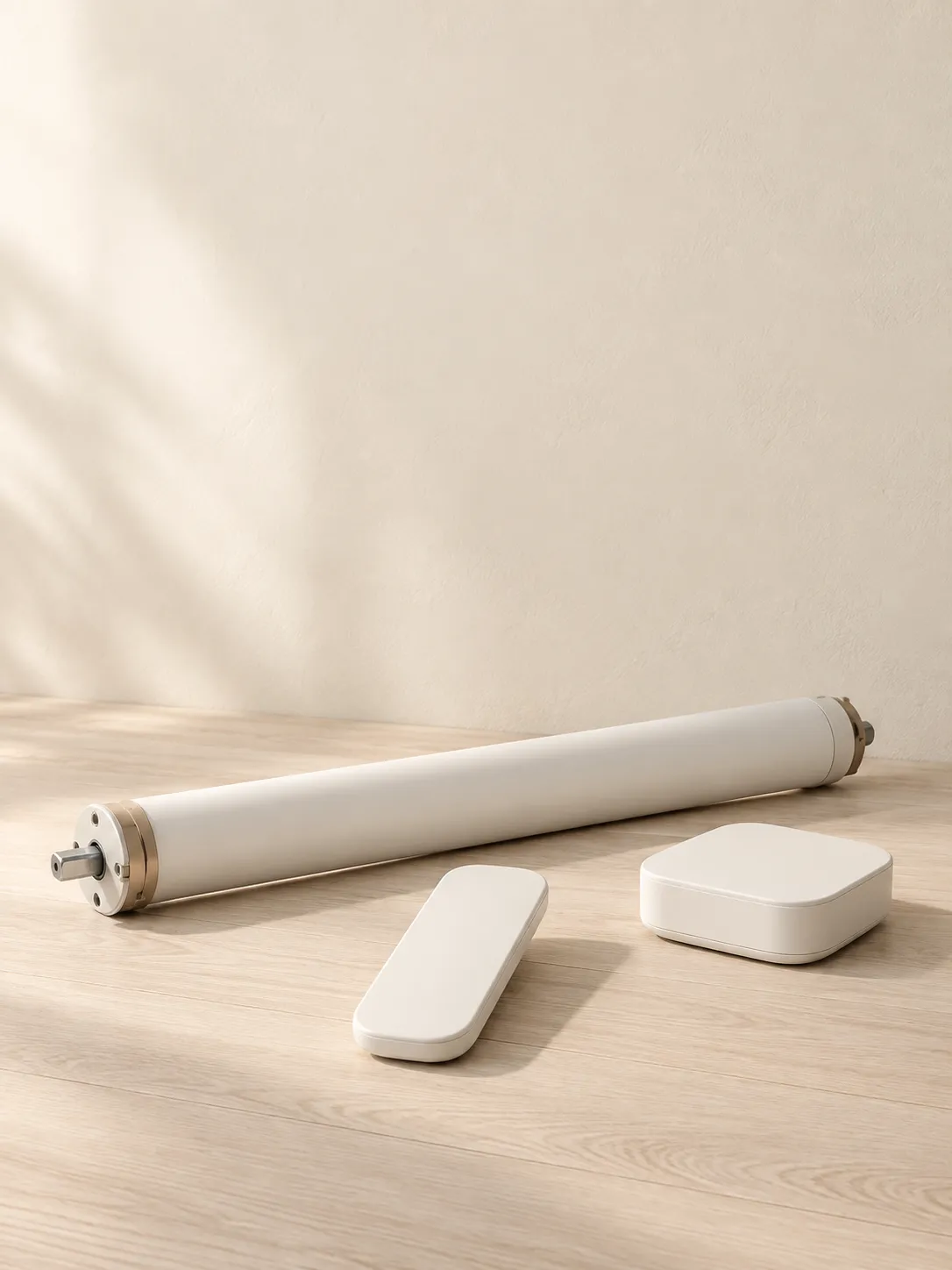
Motors, remotes and hubs: what raises the cloth, and what tells it to.
We size the track and the stack to the opening and quote the cloth alongside the doors it hangs in front of.
Get a free estimate